This post has a huge round up of all the best preschool writing practice resources and activities. As I write this, I’m just starting homeschool preschool with our 5th child! 10 years ago, my oldest was 3 and we started dabbling in homeschooling when I’d get her up from a nap 30 minutes early to do “special learning time with mommy.”
(Side note: I was SO reluctant to homeschool. Even with a background in teaching… If you’d have told me that in 10 years, she and I would be homeschooling high school when she was 13 and that I’d be writing curriculum, I would have probably laughed… anyway, that’s for a different post. If that’s you, though, you’re not alone.)
I digress.
Your young children will learn to write. And you can help them at home! I’ve learned a few things about teaching writing skills over the years, and let’s just say I’m WAYYYYYY more relaxed about it than I used to be. But I’m still very intentional.
Building those fine motor skills and hand-eye coordination is so important. Play and fine motor activities is a great way to build hand strength and increase coordination. I have an entirely separate post on fine motor activities – which is where most children need to start!!
Yes, you can start teaching lowercase letters and proper letter formation before your child’s pencil grip is perfect, but generally, young students need TONS of play and fine motor strengthening activities in addition to practicing writing letters. Make sure you’re doing those activities FIRST and then add in some of these ABC writing activities for eager children or older children (4-6 years) who are ready to start working on the beginning writing process.
Did you know that in most cultures around the world, including the highest academically achieving countries, early childhood is reserved for play. Children learn through play. There is ZERO debate on this among early childhood experts. If your preschooler couldn’t care less about writing the ABCs, don’t worry one bit. I’ve had kids who were eager to write their name at 3 and a kiddo who finally remembered the first letter of their name around age 5. I’ve also worked with children who learned to read at 7 or 8 or 9… and they are just fine!!
This post focuses specifically on writing skills & activities! Many of which feel play based!! We’ll cover:
- pre-writing skills
- letter recognition through writing
- hands on writing activities (i.e. play dough, shaving cream, etc.)
- daily writing routines ideas for preschoolers
- free printable worksheets & editable name tracing printables
Pre Writing Skills
Some basic early writing skills to work on include:
- drawing straight lines: use different lines too – vertical lines, horizontal lines, and diagonal lines
- drawing circles
- drawing or copying various shapes: circles, squares, triangles, rectangles
- tracing – letter tracing, line tracing, etc.
I love using dry-erase marker tracing books for kids. They include all of the above and are reusable. We’ve brought these on road trips for our preschoolers and they keep them entertained for a LONG TIME. 10/10 recommend. Haha. These are the 2 that we’ve had for years. My littles also loved having these types of books to do when I’d be working with an older child for lessons or in a waiting room.
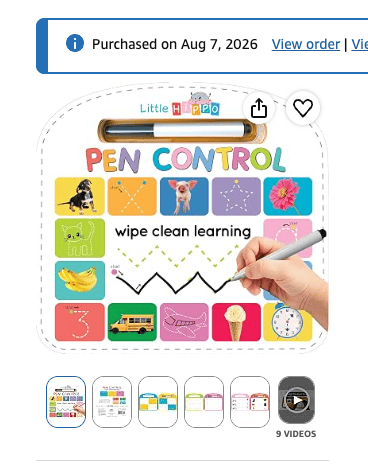
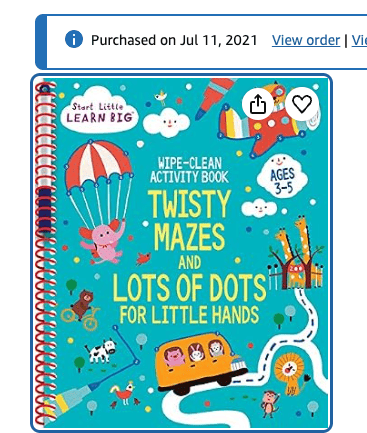
The one on the left I JUST repurchased for our 5th… after 4 kiddos’ heavy use for 8 years, it was time. Haha! The right hand one was a FAVORITE as well; purchased for a road trip 5 years ago. I recently tossed it because the pages finally were looking a little worse for the wear. But I’ll rebuy it when the pen control one is too easy.
Fun Activity for Name Writing
All of my kids have loved learning to write their name in cursive. You can use this activity with print or cursive. It might be more appropriate for an older preschooler (4-5), though some 3 year olds might be eager or ready for this.
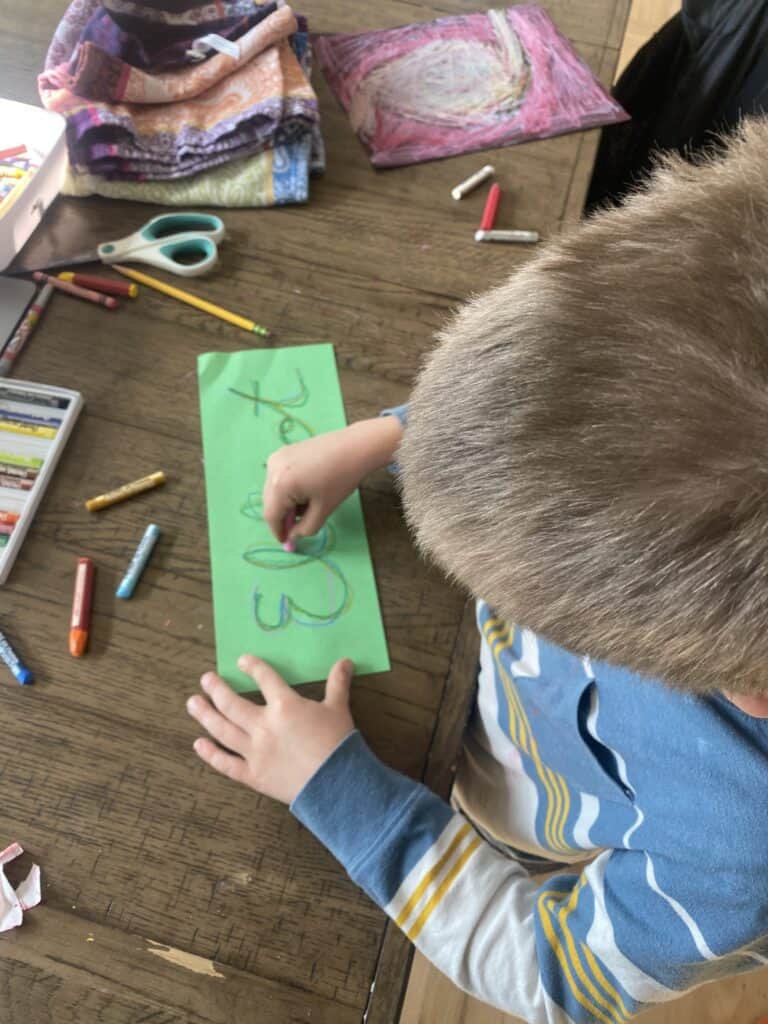
I write the child’s name in black marker. (In either cursive or print)
Then I let the child practice by using crayons to trace over and over it making a “rainbow name.”
This is a fun way to teach that names begin with an uppercase letter; I use “capital letter” and “uppercase letter” interchangeably. I just narrate what I’m doing with my pen as I go. Then I sometimes hold the child’s hand to help them write their name. I do emphasize “proper” letter formation.
Generally print letters in English start at the top and go down. Then you write horizontal lines from left to right.
Kids think tracing their own name with all the colors of the rainbow is so fun! If a child is still working on pencil grip, I do like the special crayons made for that: triangle crayons or bulb shape.
Alphabet Tracing Worksheets
I’ll pick a non-worksheet version for little ones almost any time I can (non-worksheet ideas below), but sometimes you just need or want a good ol’ worksheet for tracing letters of the alphabet.
Younger children with older siblings who are doing school work (or homework) often want to copy and just have a turn to feel like they’re doing something important like a “big kid.”
I have an early phonics printable packet that helps kids get a jump start on letter sounds by teaching phonograms (aka: letter sounds & letter combinations). It includes tons of letter tracing pages for a variety of ages and abilities… starting with the giant letter tracers on the far left.
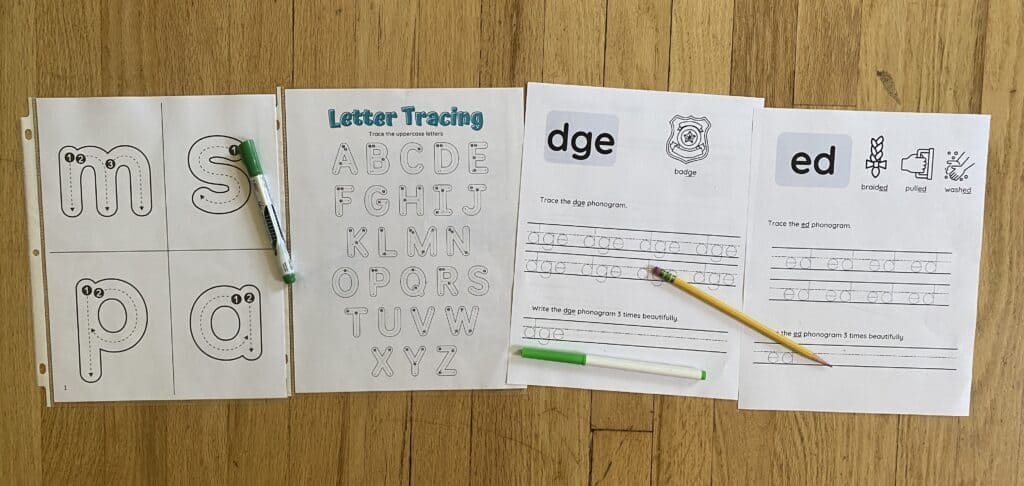
These bubble style uppercase letters and lowercase letters pages from the packet are two of the young learners faves!! They just trace inside the letter. Download for free by clicking here.
My big kids all have bins of independent work for homeschooling and this is the perfect type of thing for putting in a little bin for your youngest learners.
Pencil Grip Worries
I have 2 kids who hold a pencil perfectly and 2 who are very smart & academically successful and they hold it “the wrong way.” I tried and tried to fix it to no avail and decided it wasn’t worth the battle. My 5th tiebreaker is TBD but he holds almost all art & cooking supplies with a “good pincher grip” that is the precursor to pencil grip, so it looks like maybe he’ll get it.
The main thing you can do to make sure kids get good hand muscle strength is tons of fine motor play and activities. Those ideas are spelled out more in this fine motor post, which you should read next! But anything that induces that pincher grasp naturally is a great option for kids to build the muscles that help them with pencil control:
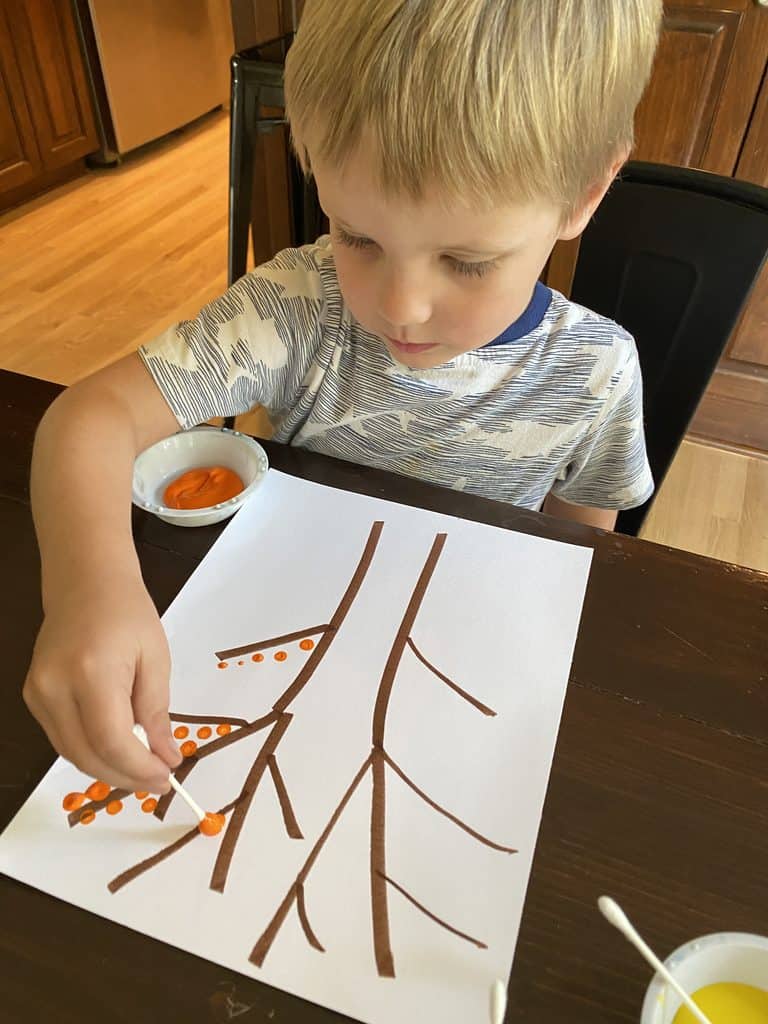
- painting or gluing with Q tips/ cotton swabs
- putting toothpicks in playdough or clay – such an easy way to force the “pincher pencil grip”
- cutting playdough or clay with a small knife
- threading beads or cheerios onto a string, dowel/ skewer rod, shoelace or pipe cleaner
- threading pipe cleaners into a collander
- playing with popsicle sticks… in playdough or a bin full of dry beans
- Dipping cotton balls in a small amount of paint as a “sponge” and dotting it all over
- Dot markers & dots worksheet
- one of my faves: ripping & gluing tissue paper! The ripping movement requires pincher grasp; for a child who likes glue, you could then let them dip a Q tip in glue (more pincher practice) and then put a dab of glue on a piece of white cardstock. Lay the tissue paper piece they ripped on the glue dab. This is a fun mosaic project. [picture of completed]
- Put some heavy cream or whole milk in a flat tray; dabs of food coloring sprinkled throughout; dip a Q tip/ cotton swab in a small amount of dish soap, and then have the child use the Q-TIP to poke the dots of food coloring and see what happens!
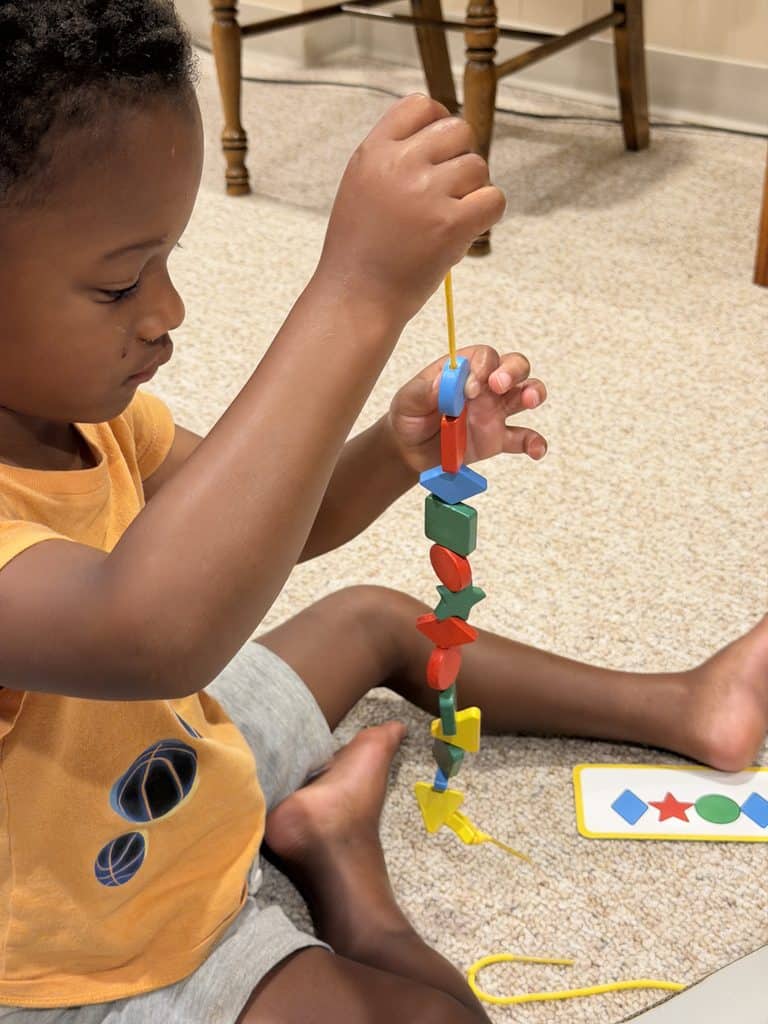

Left: lacing activity; I can’t find the original one but here’s a similar one.
Center: q tip painting fall “leaves” on the branches; you could also draw lines for swirls to imitate Starry Night (Van Gough), show the Van Gough painting and then let kids choose colors to dot the swirls
Right: Aldi brand fruit loops 😂 on toothpicks and bamboo skewers that are stuck in playdough… I just put out the random items and she decided what to do.
Preschool Worksheets
Okay! so many cute worksheets for this age… personally, I never force preschool worksheets. Some kids love them, some don’t. Your hands on, tactile kid may not like worksheets. That’s okay. Your super active bounce-on-the-trampoline-kid who was probably riding a strider bike at 2.5 – he or she may not think worksheets are fun at age 4. That’s okay. They’re not going to be academic failures.
LOL I say that with a smile… because I had a couple no-worksheet kids and they’re doing great! They can read and write and we’re all fine.
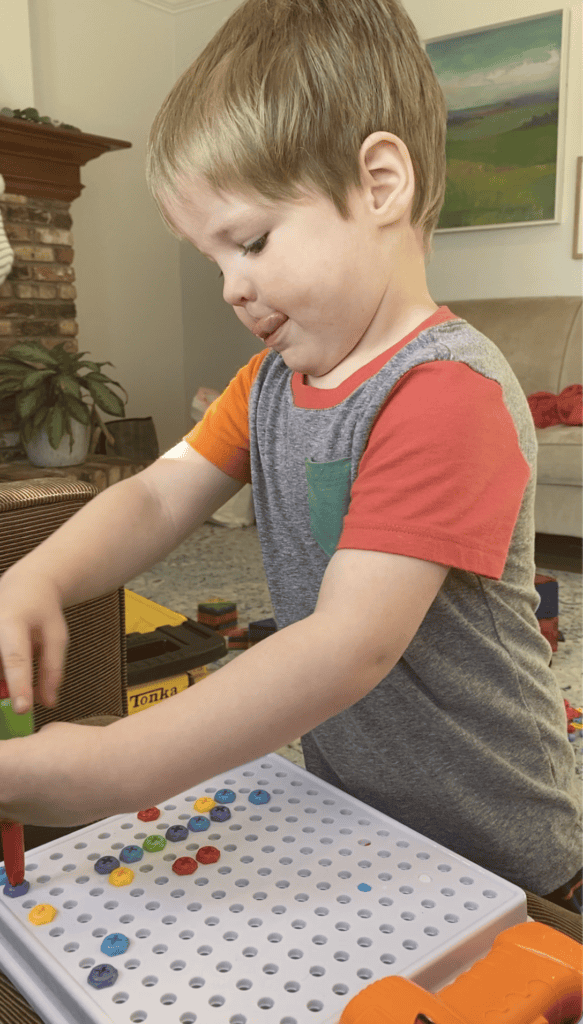
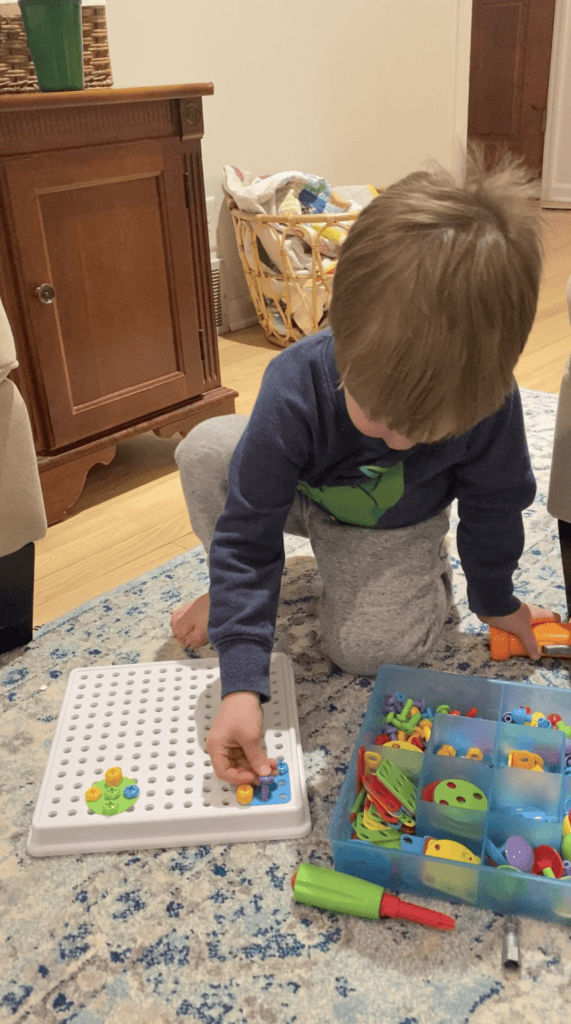
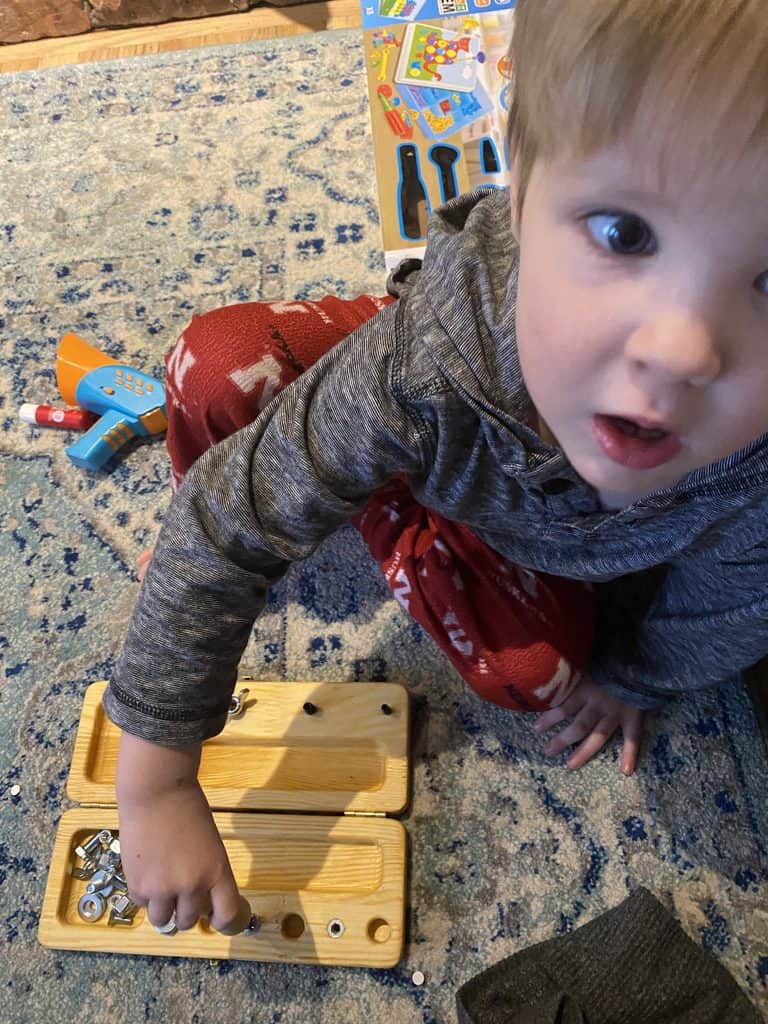
Above: This was my no-worksheet kid. He LOVED to “fix” things though. (One time he snuck off and removed MANY outlet covers with a screw driver – yikes!! 🤦♀️ I’m all for real tools for kids, but I think we bought the screw driver toy on the left so that he’d stay nearby during homeschool days and not get electrocuted.) Anyway, he’s always been more interested in hands-on stuff. Didn’t like any worksheets. But, around 5 or 6, he learned to read & eagerly learned to write letters, then words, then sentences. At 8.5, he’s doing great academically. Don’t worry about it if you have a preschooler who prefers play to writing.
Links: left & middle are the same toy; similar montessori screw board kit (right)
Some kids love worksheets though! Great!! (I have a couple older kids who were like this too… they still like workbooks, brain teasers, sudoku books, etc.)
Here are some cute preschool writing worksheets you can print out! Again, these types of printable activities are great for a little “independent work” binder/ drawer/ basket for a kid who loves this sort of thing.
These help kids:
- Recognize letters, numbers, and shapes
- Trace, draw, and name different shapes
- Use simple lines, shapes, and squiggles to form the skills for writing mechanics
Fun Alphabet Practice
Kids usually begin to pick up on the whole idea that there’s an alphabet and the letters mean something between 3 and 6. Worksheets do not teach this… a print-rich environment, reading to children, lots of adult conversation and minimal screens set the stage for reading readiness.
Some kids are ready to begin letter sounds at 3 or 4, some kids are more like 5-6. When they’re 12 and can read, no one cares when they started.
If you’re not sure whether or not your child is ready for alphabet activities, read this post then circle back!!
Okay here are some ideas for practicing alphabet letters that are so much fun!
- Sing the ABC song (duh)
- super long ABC puzzle (Melissa & Doug) – this is my favorite way to introduce sequence of the alphabet. I just hand them the next piece, and start singing the song and pointing to the puzzle pieces we already have. Then I pause when we run out and say the next letter, hand it to the child, and repeat. Haha eventually they get it.
- Draw a large letter! – cover your table with a roll of paper, draw a large letter on it (it’s fun to start with the first letter of your child’s name), then color it or fill it in with playdough, stickers, legos… whatever is fun!
Tactile Boards and Other Cool Learning Toys
I hesitate to even include these products because I’m generally a stick-in-the-sand kinda gal. Give me any old household item laying around and we can do some fun early writing practice and games. Hence the amount of Q-tip activities above. Ha!
BUT there are some cool educational toys and materials out there that can provide an added layer of writing fun! You DO NOT have to buy any of these to teach your child to write at home. An insane amount of money is spent on fear-based-marketing of “educational toys” to moms who just want to teach their children to write their name and read simple books.
- Letter cards are fun for matching: uppercase/ lowercase pairs
- These self correcting letter puzzles are fun for letter awareness
- This train puzzle is my all time favorite way to practice the alphabet sequence!
- These magnetic letter tactile boards are kind of fun, especially if you need something to occupy a preschooler while trying to nurse a baby or help an older homeschooled child (or both simultaneously! Agh!)
Easiest DIY Free Editable Name Tracing Worksheet
Click my picture below (or click here).
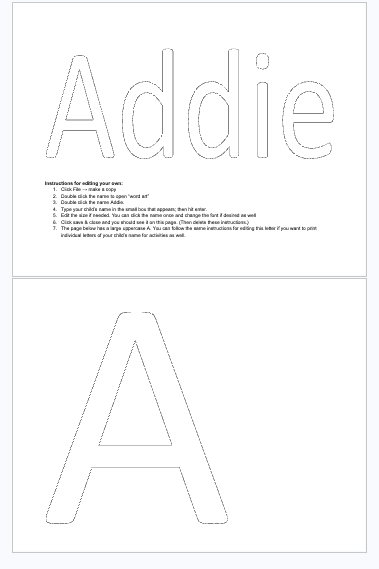
This will open up the file in google docs on your computer. Click file –> make a copy. There are instructions on the page for editing your own.
Replace the name with your child’s name. Here are things you can do with your child’s name printable:
- Change the font size and let the child try writing their name in a variety of sizes
- Change the font and show the child how their name looks in lots of different font.
- Make the font size fit on one page and let the child trace inside the bubble letters with any fun writing utensil – my littles like paint sticks!
- Make the font NOT outlined; print & tape it to the window. Put another blank white sheet of paper on top of it and show your child how they can see the outline to trace.
- Make the font NOT outlined; print; put on carpet and let your child poke the lines of the letters of their name with a toothpick – go into a dark room and shine a flashlight through the paper to “project” their name on the ceiling or wall.
- You can make the font HUGE and print one letter per page. These can be laminated or go in plastic binder page protectors for “play dough ” or other activities that help the kids learn to form letters
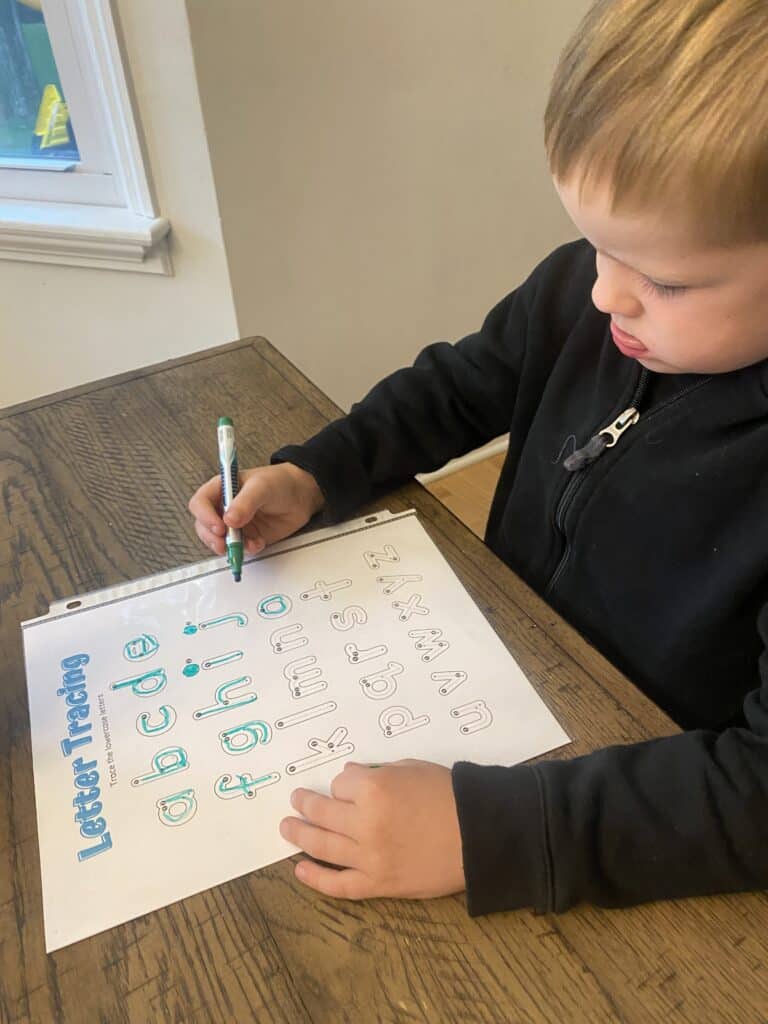
- Print and put in a page protector for the child to try to draw letters with a DRY ERASE marker.
The above suggestions are honestly some of my best pre-writing activities ideas! You can use any of these preschool writing activities on a rotating basis and your child’s time will be put to good use.
Truthfully, for preschool, I follow my child’s eagerness and readiness… I put out 1-4 types of activities in shallow bins, jelly roll pans, folders, etc. If the child has ZERO interest, it’s okay. Circle back in a month or two and try again. I thought my 4th kiddo would be so eager to “do schoolwork” like his older siblings, and he just wasn’t interested. He built epic lego creations, played with building blocks, drew for fun (drawing is still great opportunity to practice basic skills), learned preschool math skills with my favorite hands on preschool math activity book, built stuff with hammers and nails, etc. I had a lot of these pre-writing activities available and he’d do them sometimes too. Then around 5 or 6, we “started kindergarten” at home and he was just fine! He learned to read over the course of Kinder-2nd grade and is doing great academically.
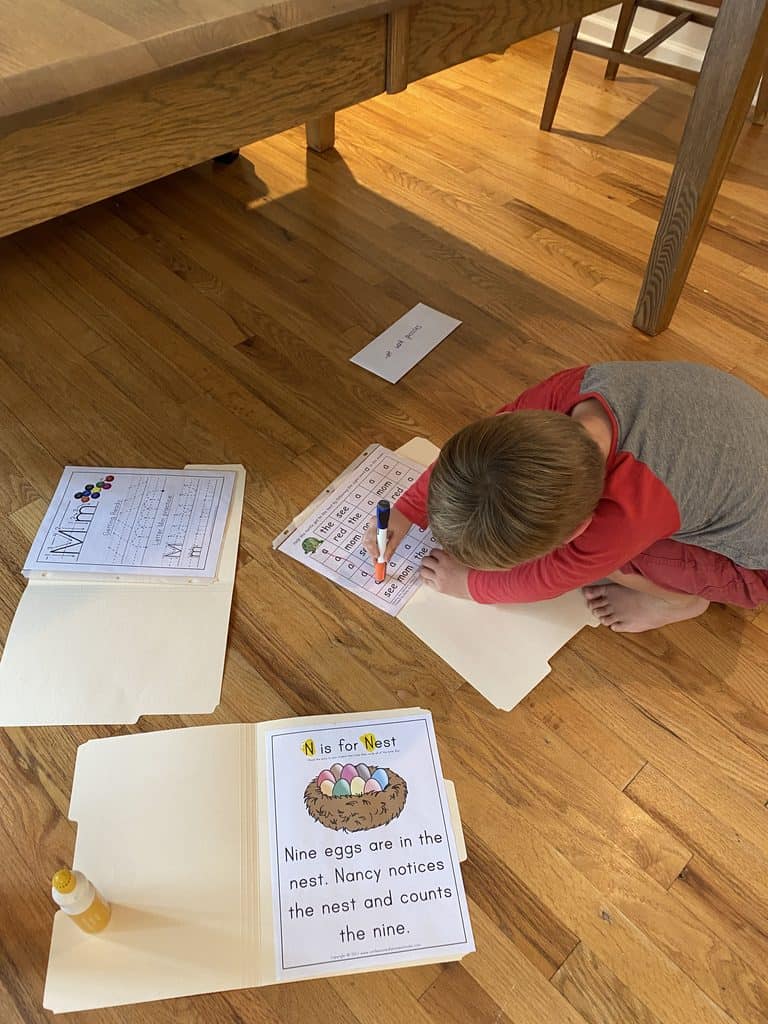
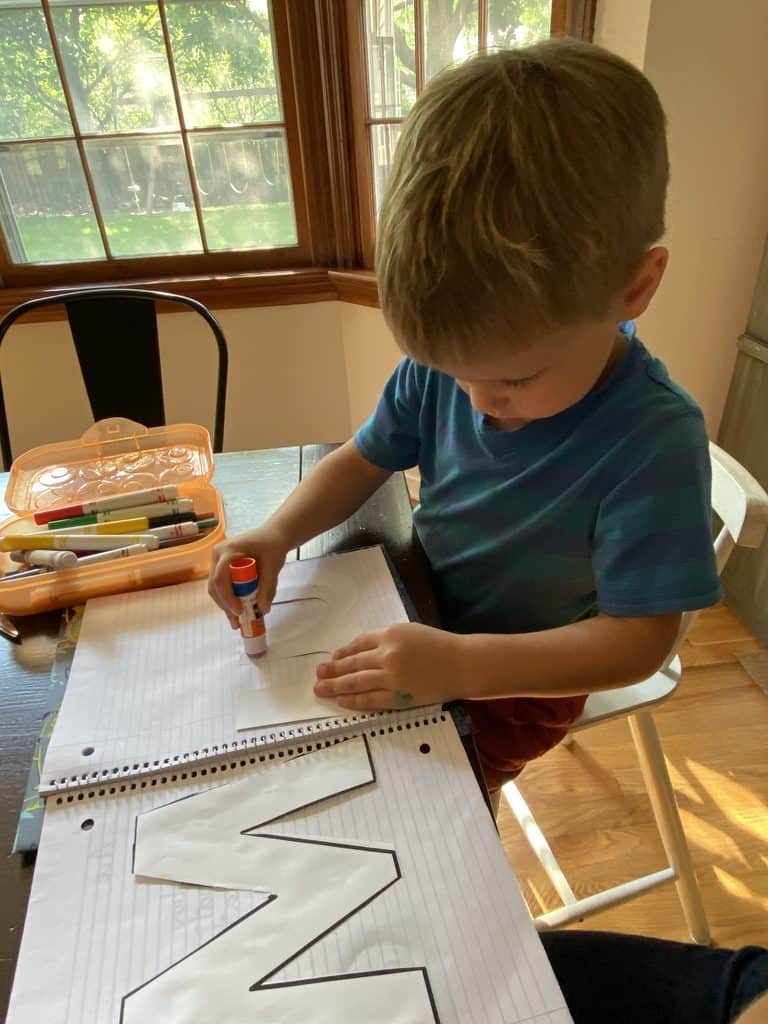
If you have a kiddo who is curious but needs a lot of help, just show them what to do and then let them take over with minimal criticism or input. These activities are all meant to be FUN, simple ways to introduce your kids to pre-literacy and pre-writing activities. Have fun with your preschooler at home.
Happy homeschooling!!
BTW – I will ALWAYS champion books & songs as the best early learning foundation. I’ve seen the positive fruit of this approach in all of my own children and heard from many of the hundreds of families who use our Musical Memory program that the effects are indescribable.
The BEST bang for your buck in terms of time & money will be to begin playing these songs before your child is old enough to understand them AND start checking out books off the coordinating booklists from the library. I PROMISE you will not regret this.