
Oh curriculum. I have so many thoughts about you. On one hand, curriculum is primarily for parents… if you think about it. Not children.
And parents don’t teach curriculum; parents teach children. Children are naturally wired to learn. But we put so much stock in curriculum. I get it. I’ve used a lot of curriculum over the years and I do weirdly enjoy reading through and thinking about curriculum.
But just remember – you can teach a child almost anything they need to learn without curriculum.
Anyway, I have lots of opinions about curriculum that may need to be written down in another post!! For now, I’ll just stick to sharing my top picks for each subject area.
Learning to Read
What I actually used?
Phonograms + anything that had gradual practice built in. My go to books were: 100 Easy Lessons, All About Reading Readers (yep, the readers only.)
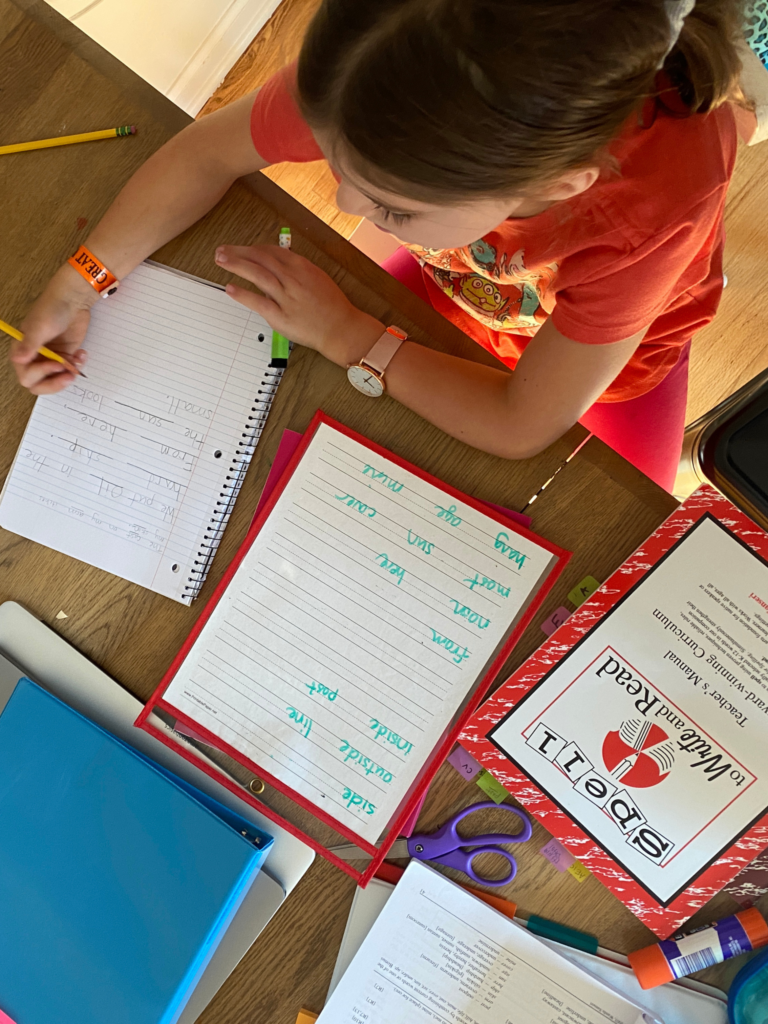
Around age 6-7, I added Spell to Write and Read (SWR) … You need the red book along with “The Wise Guide” and a primary learning log for your first year through. (You can use spiral notebooks after you see how it works.) We do this a couple times a week, we’d do spelling lessons from here; the method is meant to teach kids to read through the process of writing out increasingly varied spelling words. It’s Spaulding phonograms based & very thorough.
However, it’s old fashioned and not intuitive. You have to read most of the teacher’s manual before starting to really understand what’s going on. Haha!
Logic of English
Therefore, I often recommend Logic of English Foundations to people who don’t mind paying more for a program that is:
- easy-ish for parents
- open and go
- scripted
- structured lesson by lesson
- has cute illustrations/ readers/ etc.
If you have a young child (probably ages 4-7) who seems ready to read and doesn’t mind a little bit of fluff/ repetition, Logic of English Foundations A-D is amazing. I used it with my 4th and it was perfect for him.
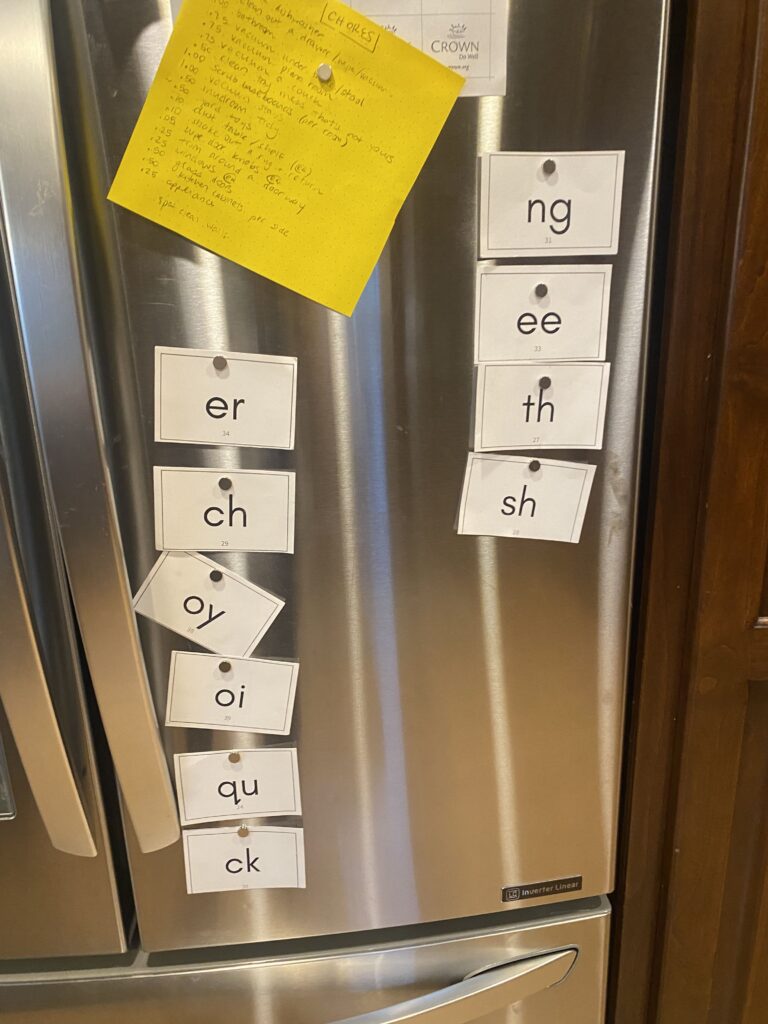
We just used the teacher’s manual, workbook, readers & phonogram flashcards. (We had our own small white boards as well.)
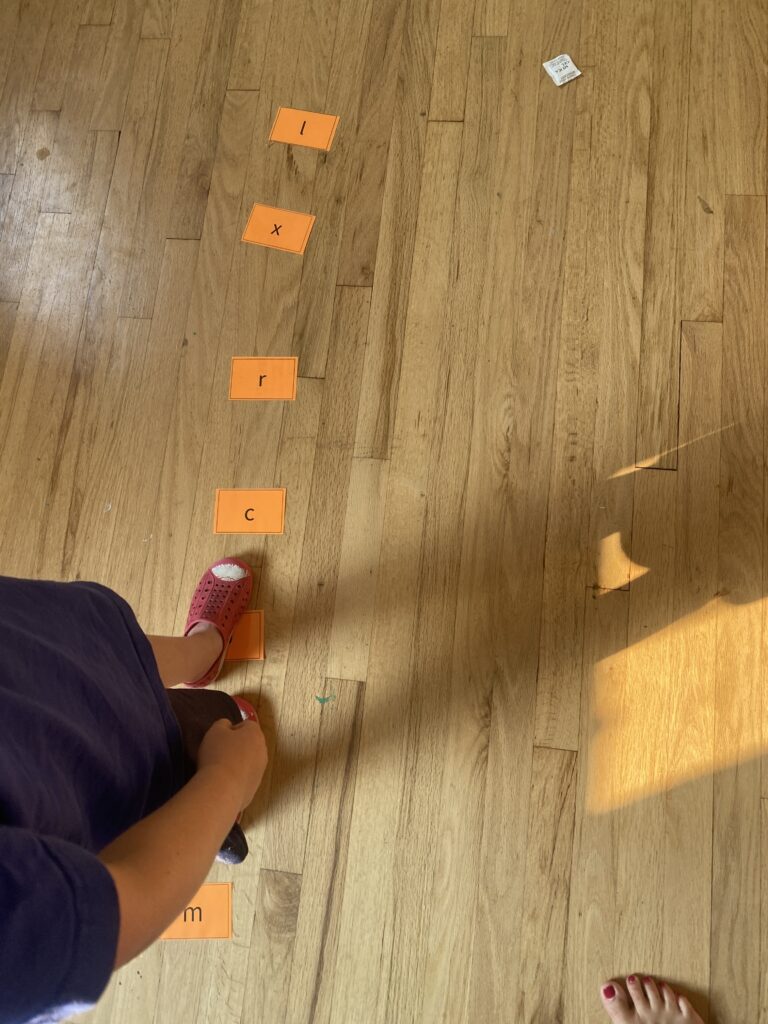
Short cut: You can teach the first 26-30 phonograms just through flashcards and games and then start in book B.
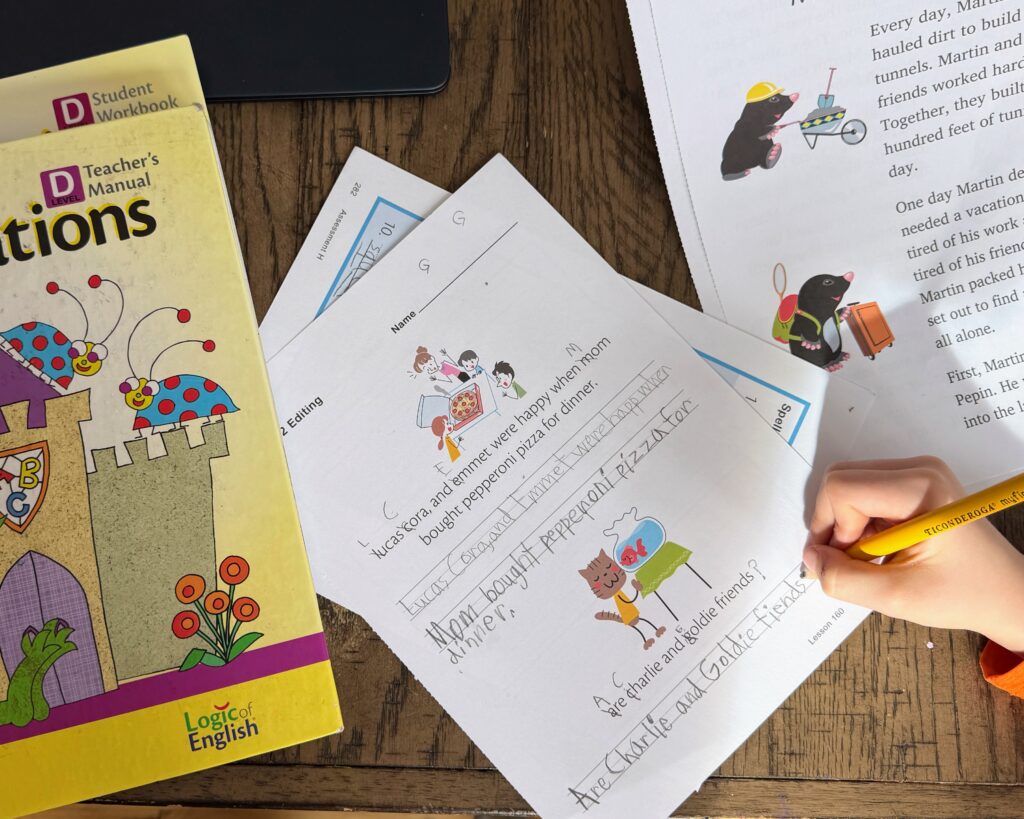
It truly has an almost identical method to Spell to Write & Read but it’s easier to use. If you have an older child who is a struggling reader, Logic of English Essentials might be a good fit! Highly effective. But again, it’s a bit redundant and boring. Sooo you might need to skip some stuff or get creative to spice it up a bit…. or teach the phonograms with flashcards and then jump into All About Reading/ Spelling which is just laid out a little differently.
Other Options
- All About Reading/ Spelling – Very effective but it didn’t fit my personality! This is built on the same method as LOE and lots of people love it. I’ve looked through AAR Level 1 and AAS Levels 1-3. Contrary to what their website says, I really think you could JUST USE All About Spelling to teach reading (for most kiddos) & also grab the leveled readers to practice reading. In my opinion, you don’t need both programs unless you have a learner who would benefit (but not be discouraged/ bored) by lots and lots and lots of repetition.
- Teaching Language Arts Through Literature – Blue & Red books focus on learning to read; these would be better for older beginners who already know their ABCs and basic letter sounds but aren’t reading fluently yet. It’s phonics based, not phonograms based and I personally prefer a phonograms approach. But it’s still effective & Charlotte Mason enthusiasts especially like it.
- The Good and the Beautiful – Very popular and effective; I’ve seen some people complain their kids don’t get the hang of blending and fluency… but I’m guessing that’s mostly first-time homeschooling parents. Fluent reading takes a LONG TIME. I remember thinking with my oldest, “She’s never going to sound fluent!!!” (Alas, she does! And it’s all fine.)
Personally, I always think adding phonogram flashcards is one of the keys to fluency!! If you add those to TGTB, your child will have a GREAT foundation, though you may not even need them. I didn’t use TGTB for my kids because (1.) The older editions weren’t as good and (2.) I didn’t want to sit with my kids individually for anything except direct reading/ math instruction. This is more of an all-in-one language arts program and we did all that other stuff together family style. So I really wanted a more direct instruction program.
Learning to Write
Writing is SO multifaceted… there are the muscles, letter formation, spelling, endurance, putting thoughts into words, vocabulary, etc. etc.
I’ve researched and learned and thought about this a LOT.
Being a good writer comes down to the combination of:
- “Grammatically correct and sophisticated language patterns” – a phrase borrowed from Andrew Pudewa
- The mechanics of writing words (spelling + handwriting) being top of mind
- Practice synthesizing your ideas and expressing them out loud.
Number 1 is most effectively & efficiently achieved through hearing and repeating good language. We’ve done this through read-alouds and poetry memorization/ recitation. I’ve used Morning Time to this end because we can all read/ learn/ discuss/ and recite together. If you want to read a whole book about using Morning Time to teach everything except phonics & math, I’d recommend Cindy Rollins’ book, Morning Time: A Liturgy of Love.
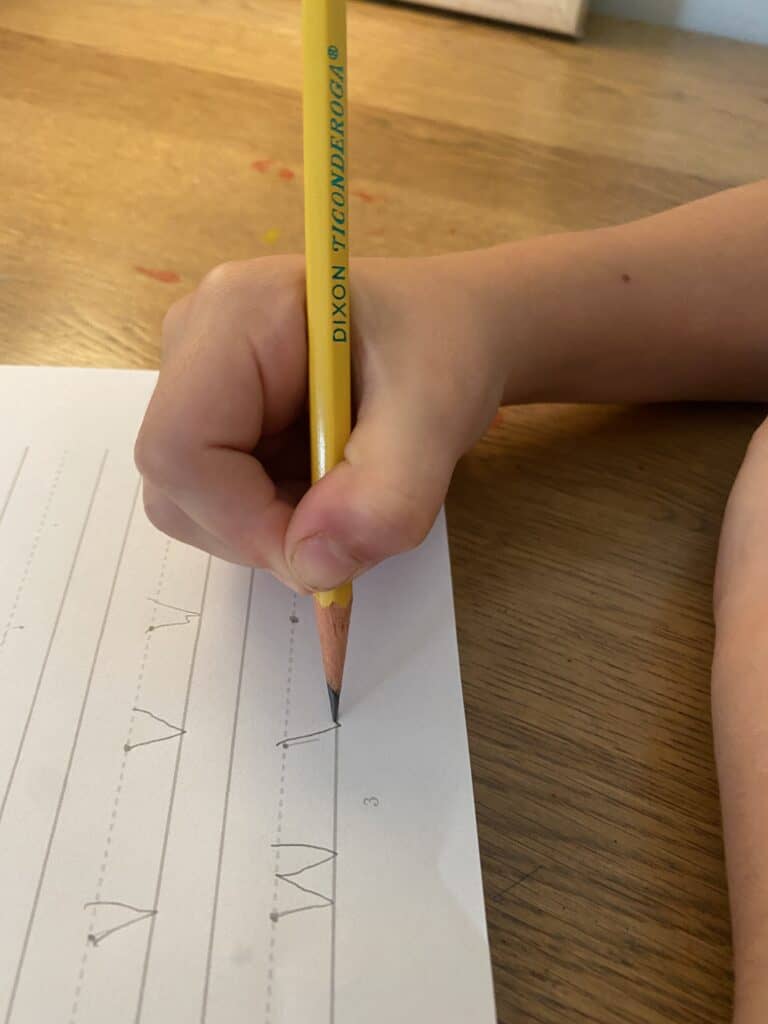
Number 2 is most effectively & efficiently achieved through fine motor strength development (activities for littles), then a wide variety of copywork; first slow & steady & short sessions. Building up strength/ endurance ages 5-12.
Number 3 is most easily accomplished through frequent oral narration and retelling. This is 100% important to the foundation of becoming a great writer.
Narration is asking your child, “Tell me something about what I just read to you,” and letting them recount/ retell whatever they heard & was important to them. This takes years to develop. Allow interruptions, questions, discussions while you’re reading aloud. Ask both specific and generic questions and do not make your child feel badly about their answer. Short & sweet, frequent practice is better. If you want to read a whole book about this process, I’d recommend Know and Tell by Karen Glass.
Poetry Memorization Program
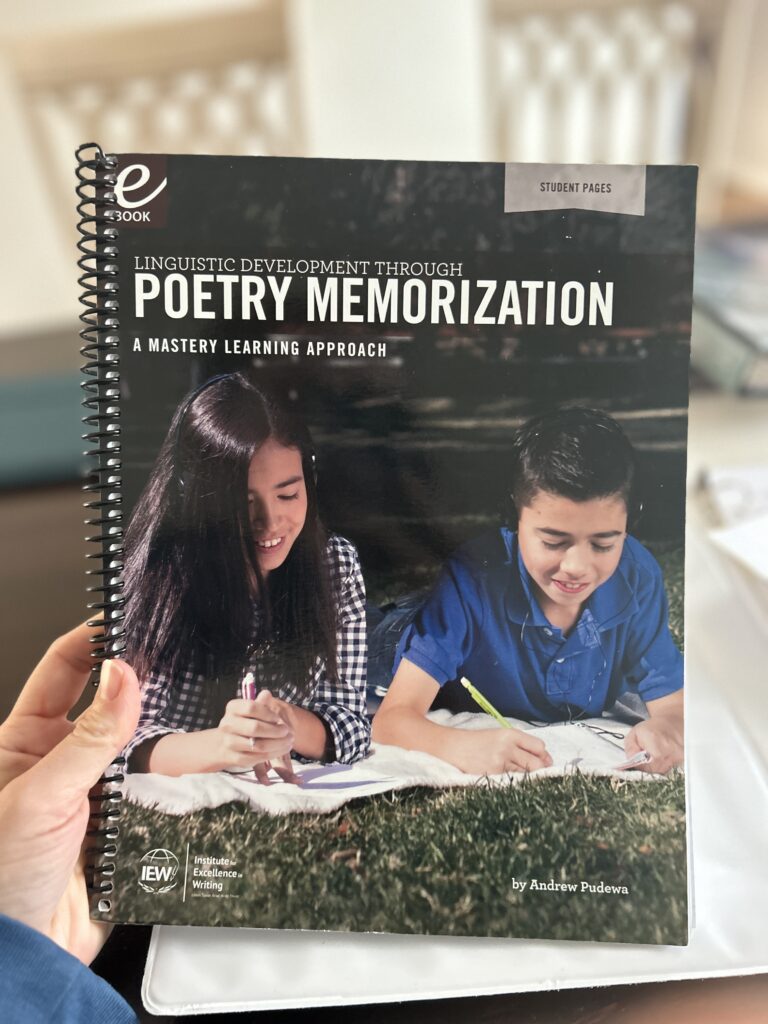
We started out working through this together at morning time. As my older kids outpaced my younger kids, we split off into this being a part of independent work. I check in often!!
I have heard Andrew Pudewa say this is his favorite thing he’s ever produced, and I have to agree. Way underrated in my opinion.
10/10 recommend some sort of memorization plan ongoing.
A Variety of Handwriting Books!
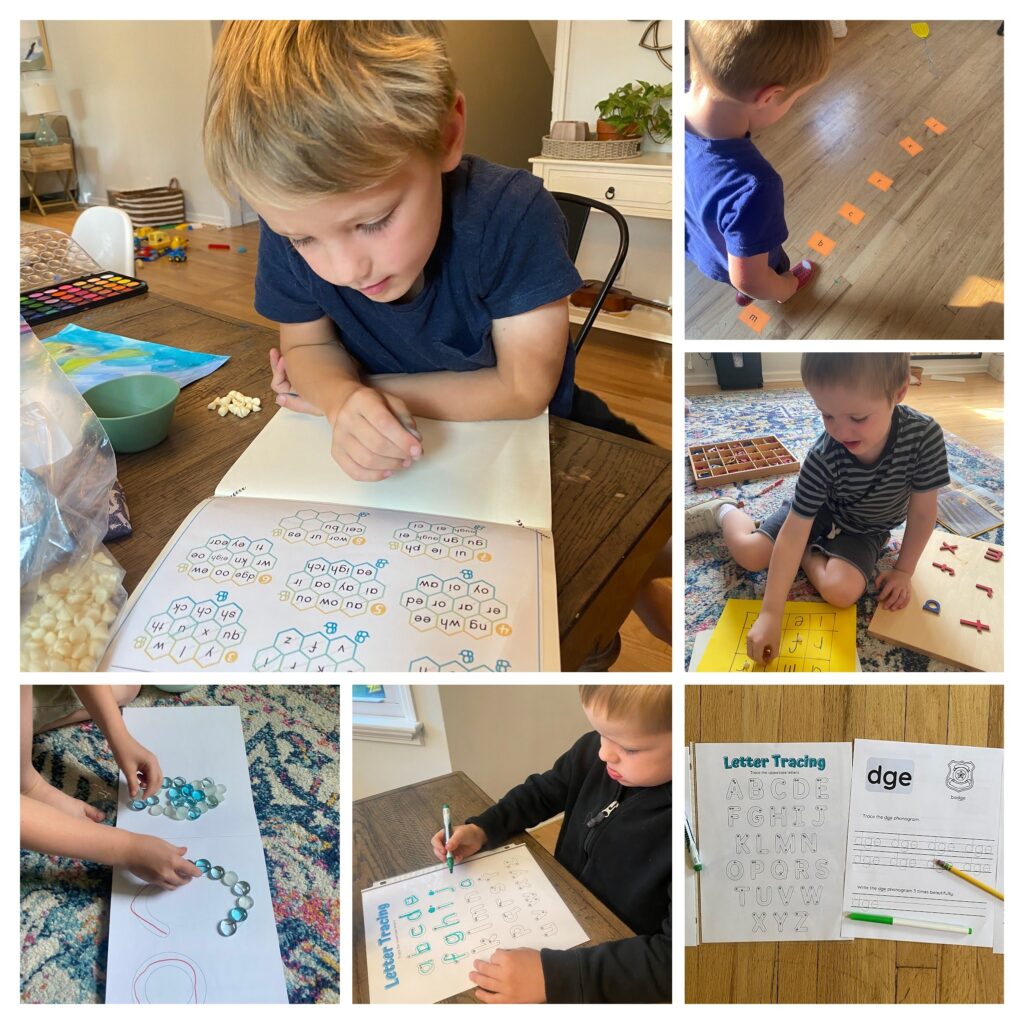
Obviously, there are a plethora of activities that would accomplish the above! Here are some resources we’ve used over the years. I love variety to mix things up! No one wants to do the same exact thing every single day for all of elementary school – snooze fest. A variety of materials is a wonderful tool in the homeschool parent’s toolbox. 😉
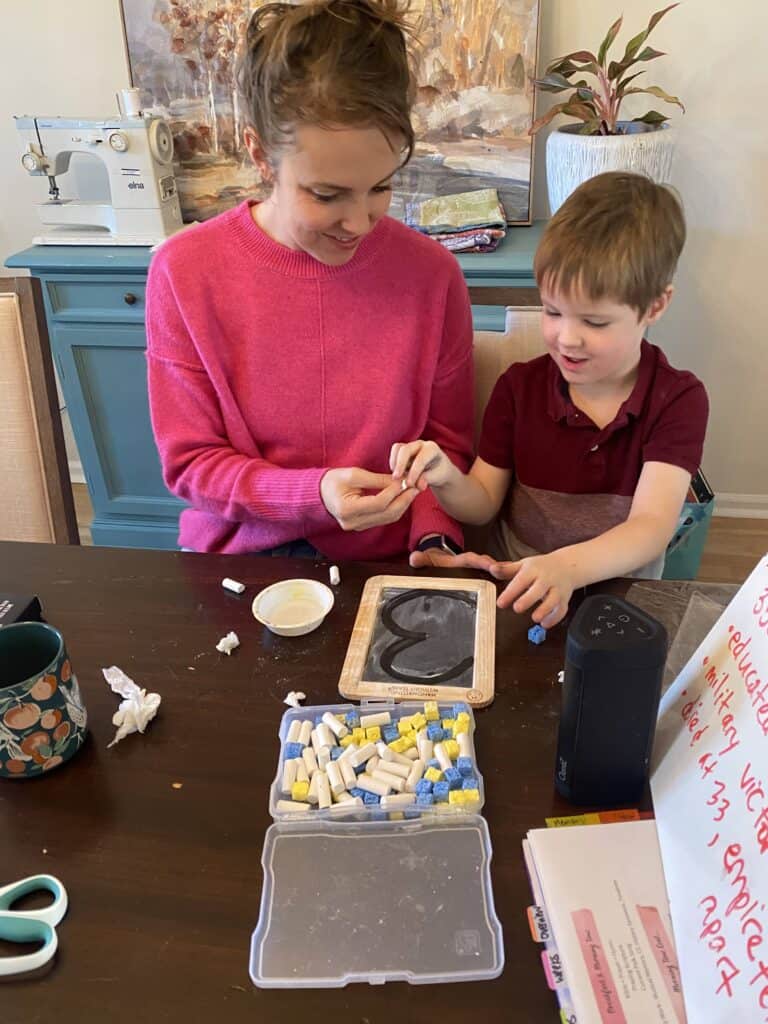
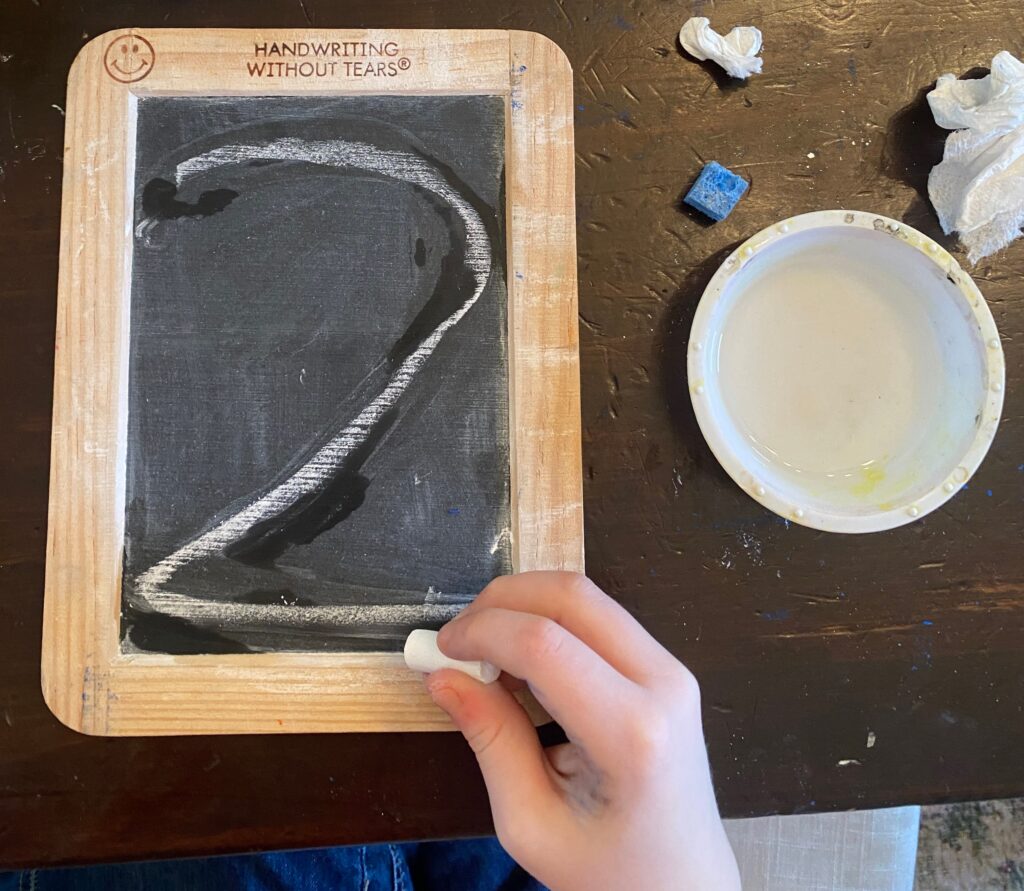
1. Mini chalkboards + chalk + tiny pieces of wet paper towel. “Wet, dry, try” method from handwriting without tears; but you don’t need their program to do this.
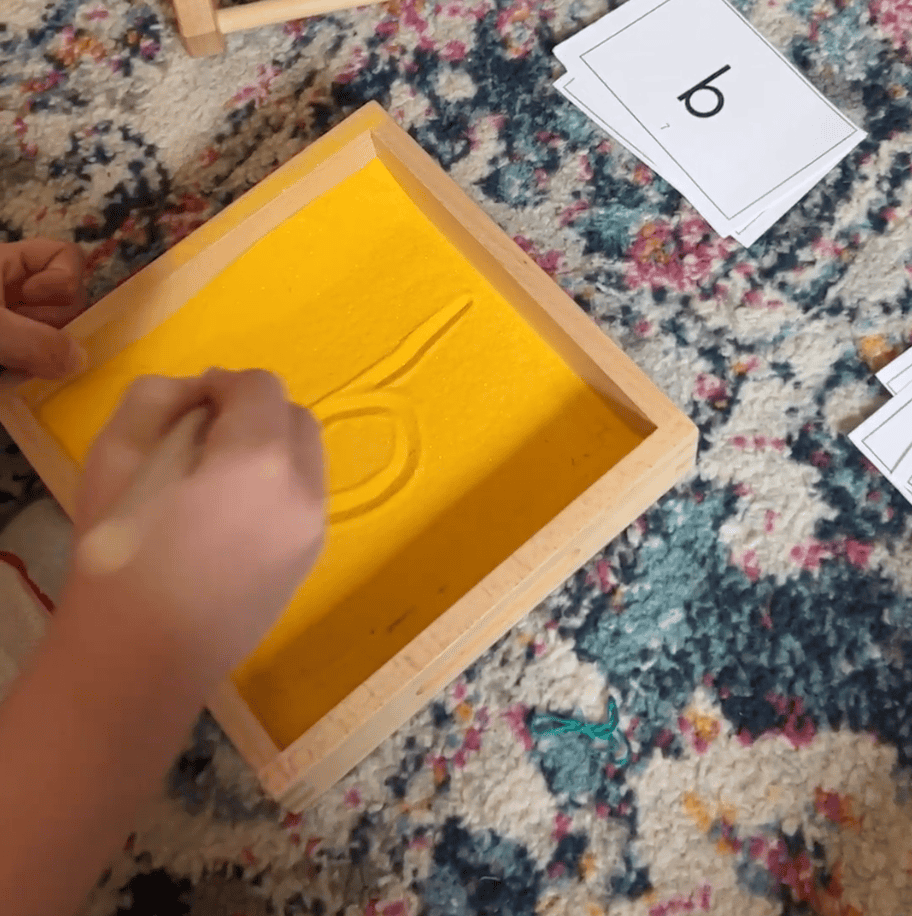
2. Mini sand tray with young children! 4-6 year olds think this is so fun. Montessori-ish.
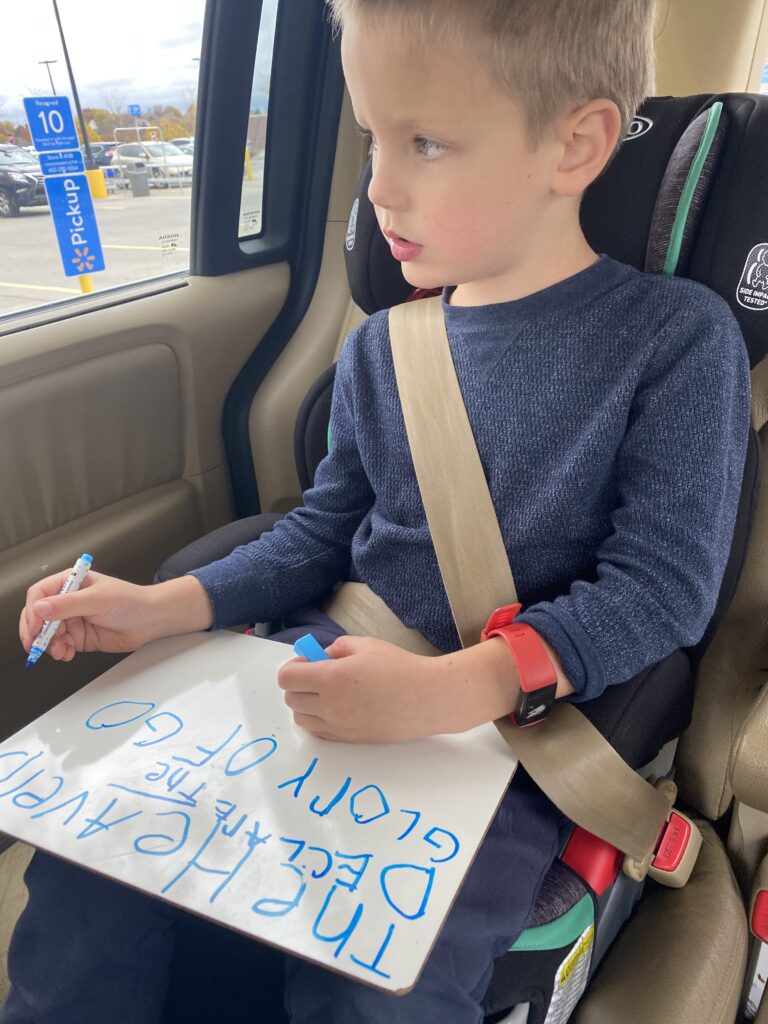
3. Mini dry erase boards & these markers with built in erasers
4. Big dry erase board – check your local Facebook marketplace!
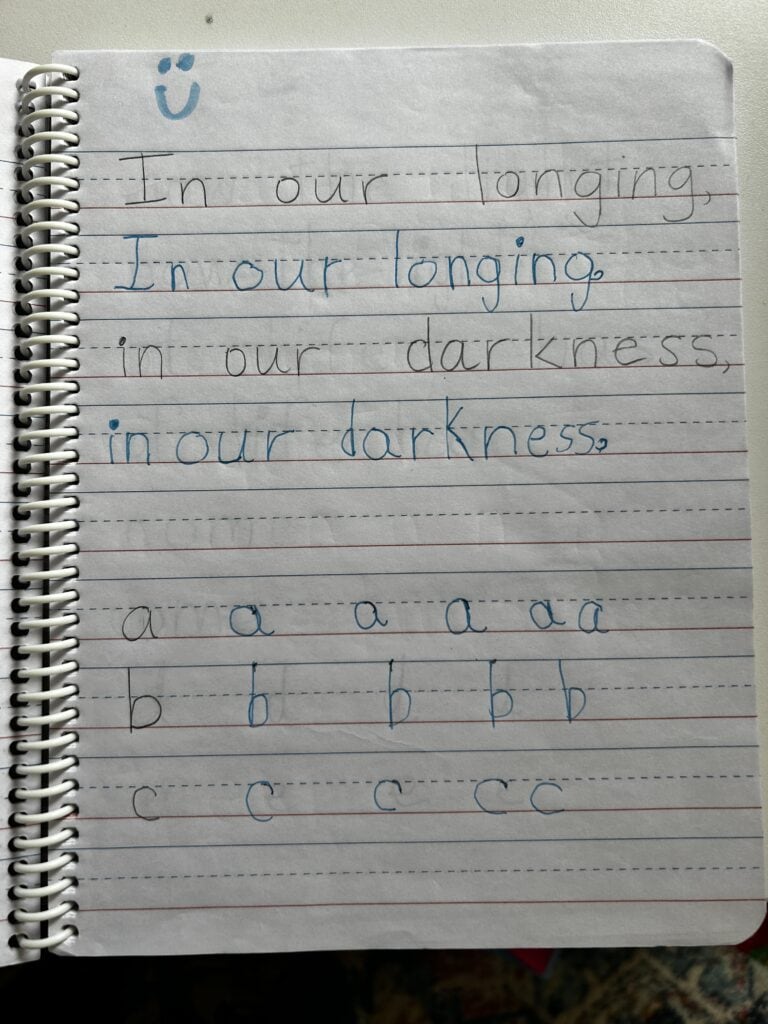
5. These spiral notebooks with traditional handwriting lines – I would often write out the letters the child was working and watch them practice right next to mine. Or we’d use these for copying a hymn or poem that the child was reciting.
6. A Reason for Handwriting – student books only; I love this program!! I usually have the child do every other line, not every single line. If you want a young child to start with cursive, you can skip to C or use T (transition).
7. The Good and the Beautiful Handwriting Books – most of my kids have been ready for their K book around age 5 and moved more quickly through these; so they usually end up working on the grade level above their current age. It’s not a race! I just say this to point out if your child finds the book boring, maybe move up a grade.
7. Memoria Press – great for younger cursive introduction!
9. Logic of English – has writing practice built in. We didn’t also use their handwriting program; again, I prefer a variety so my one child who did LOE Foundations A-D completed workbook pages and used a separate handwriting book for copying/ building stamina.
10. Dot to Dots and other Activity Books and Drawing Books – These are FUN and kids will work on them for a long time, thus building writing muscle stamina. 10/10 recommend. Here are my favorite activity books in a different post.
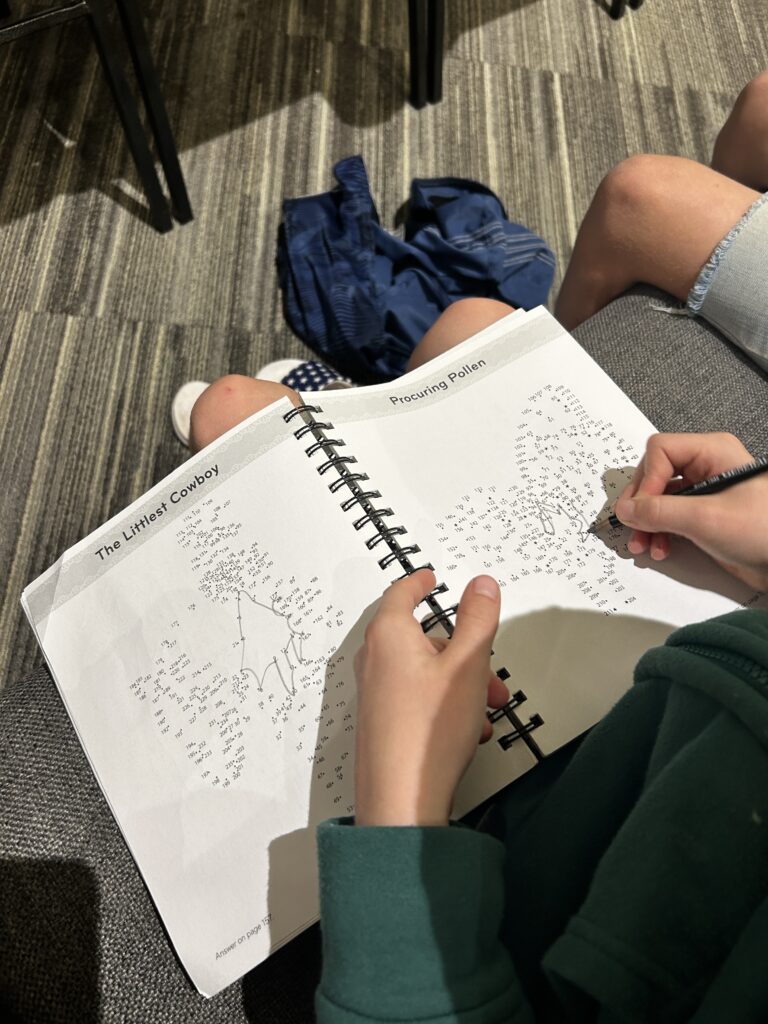
11. Random, fun writing practice – Mail Monday, pen pals, made up stories & books, writing grocery lists & birthday wishlists & birthday cards & whatever else comes to mind. Count it!! Kids are thinking about what they want to write & getting things on the page. It all counts!
Variety is the name of the game when it comes to reading & writing practice. Get creative!
Formal Writing Curriculum (age 10+)
I have started some of my kids on writing curriculum younger and some older… I think the kids who waited longer did better! If you’re doing the above mentioned 4 things (read alouds, poetry recitation, oral narration, handwriting), then you do not need to start a separate formal writing program before 4th or 5th grade. Those things ARE THE FOUNDATION of writing. If you’re doing those, you’re doing a writing program… it just didn’t come in a box with a checklist. Trust the process.
Around 4-5th grade, we’ve personally used IEW. Simple, effective, straightforward. You can use the videos or teacher’s guides.
I honestly haven’t tried any other writing program except one child did a year of Lost Tools of Writing in 7th grade with our hybrid school & it was good! It builds for years and years and is one I’d consider for older kids.
Spelling
I mainly have used SWR as mentioned above – twice a week lessons that took 10-15 minutes.
My second choice would be All About Spelling, but it does have a lot of moving pieces. You can use phonogram cards and a white board marker instead of the tiles once you understand how the program works.
If I had to pick a more traditional spelling program besides the above two, I’d try Spectrum Spelling or Vocab Loco (online; used to be spellingclassroom.com).
I have one child who is going to try The Good & The Beautiful’s new free online Simply Spelling Program this year – we shall see!
Grammar
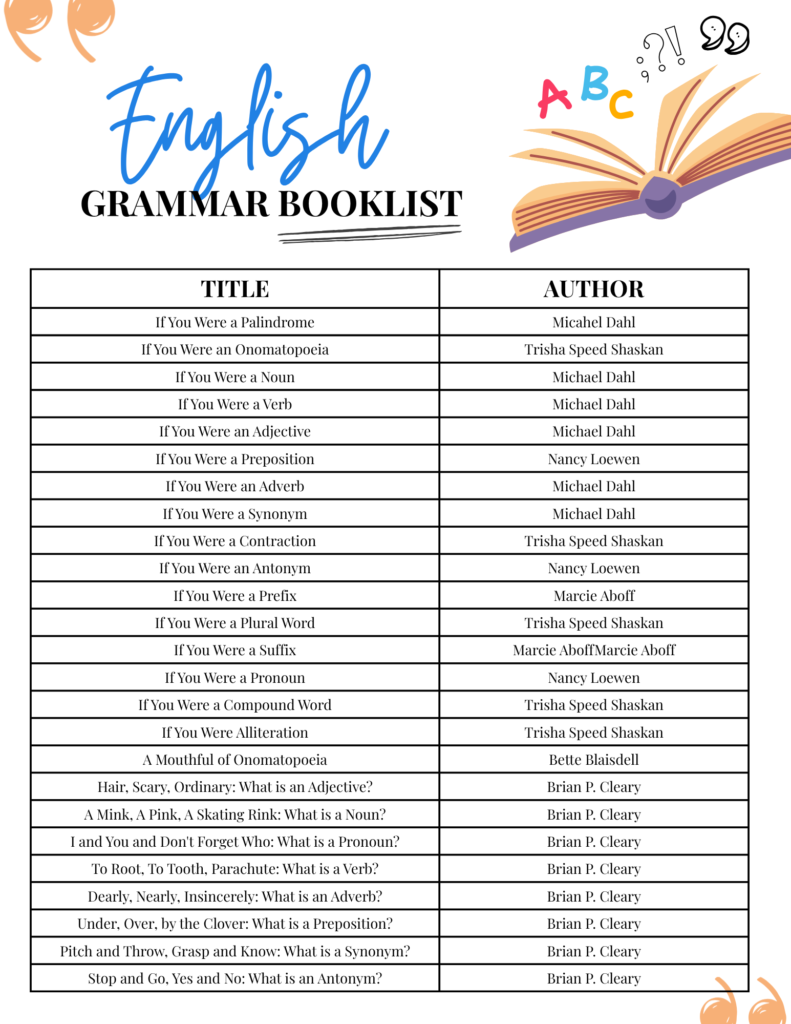
We use English Grammar songs & coordinating picture books for ages 6-10. I tried other grammar programs before then and found the kids didn’t gain anything functionally important.
I’m truly shocked how effective English songs & picture books are. If you use that for K-4, that’s PLENTY. Then start IEW writing program or fix it grammar or a more all-inclusive language arts that includes grammar… Learning language arts through literature & TGTB do a great job.
(Here is an in depth post on teaching linking verbs with a song and picture books.)
The books on the list pictured below are SO FUN & create great conversation.
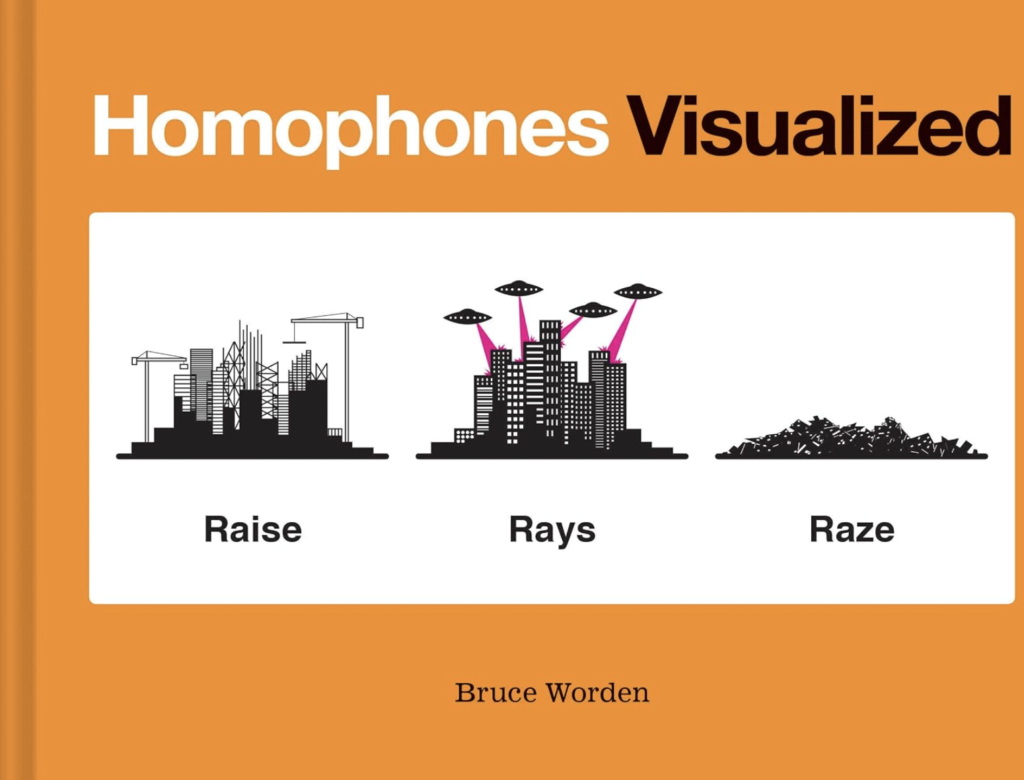
I can’t believe I forgot to add this book to the above list, but this is one of our favorite books to reference. My mom found it at a gift shop or something & whenever a child is right at the age where they’re figuring out homophones, they love to look through this book.
IEW builds grammar into the writing programs in a very useful way.
My middle schooler is doing The Good and Beautiful Language Arts, which has strong grammar! And she’s doing fine without having done a “formal” program beyond our songs & books.
I also really like Fix It Grammar, which you could start at any age 3rd grade and up.
Math
Oh math, how do I love thee. Let me count the ways. I grew up math neutral – didn’t love it, but I did well and thus didn’t develop any of the negative “I’m not a math person,” mindsets. In my opinion, that’s the worst problem to avoid!! (If you want to read a crazy book about that, try A Mathematicians’ Lament. It’s super short.)
Like a huge nerd, I read lots of books and did lots of research about math curriculum & approaches. I was DETERMINED that we’d all love math & that elementary school math would be about foundational understanding of strong number sense.
The best place to learn about math education in my opinion is Kate Snow’s Website. She’s a GREAT resource for homeschool parents… read one article a day if you really want to understand how to teach math.
My favorite preschool math program is her book, Preschool Math at Home, which I review in depth here.
My favorite curriculums are:
1. Beast Academy (Online) – Ideal for mathy kids; fun for average math kids too, though non-traditional. If you have a kid who is bored with regular math, learns facts easily, and seems to pick up everything quickly, this is what I’d use exclusively. Here’s my youtube video about how we used Beast when it was our full time curriculum.
2. Math With Confidence – ideal for people who want singapore math approach without having to learn how to teach a Singapore Math program. This is written by Kate Snow, from whom I’ve learned everything I know about teaching math. It’s my go-to rec for most families as it’s parent-friendly, hands-on, and the *perfect* amount of written work for each grade level.
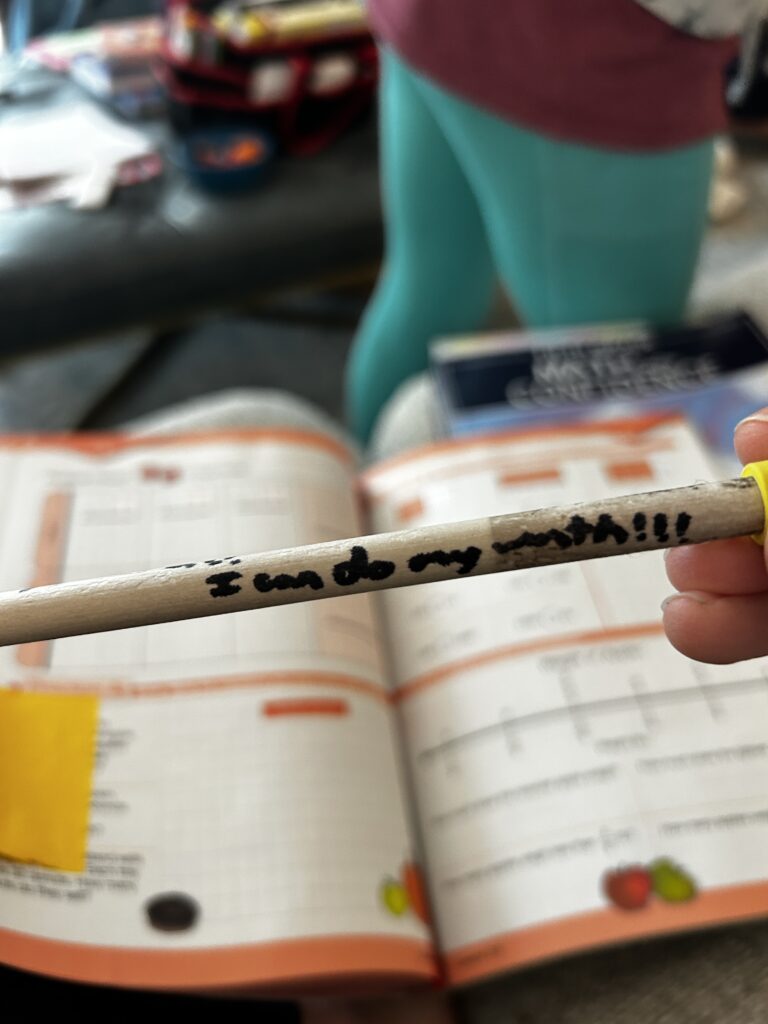
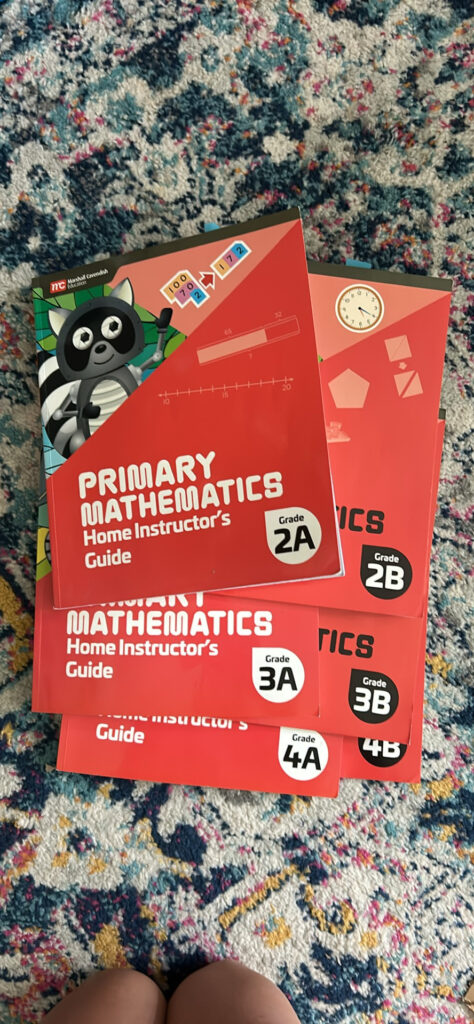
3. Primary Mathematics 2022 – Ditto the above!! This is a Singapore math program that was written to be a little more parent friendly than the first edition of Primary Mathematics & Dimensions Math. I used it with a child 2022-2024 and highly recommend, especially if you want something with fewer games than Math With Confidence. You’ll have similar results & pacing with both programs. Download samples and see what appeals to you more! (Singapore Dimensions & the traditional Primary Math are paced about a half year faster…)
**Hands on** is a core part of both MWC & Primary Math because they’re based on the understanding that young children understand numbers best through concrete representation.
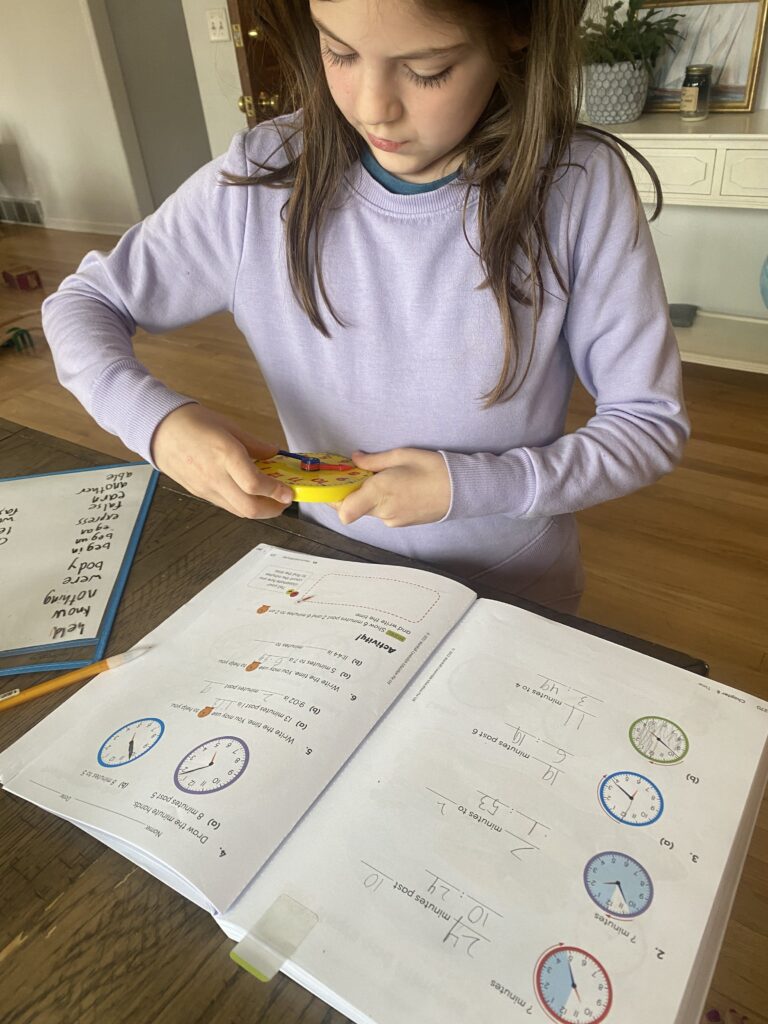
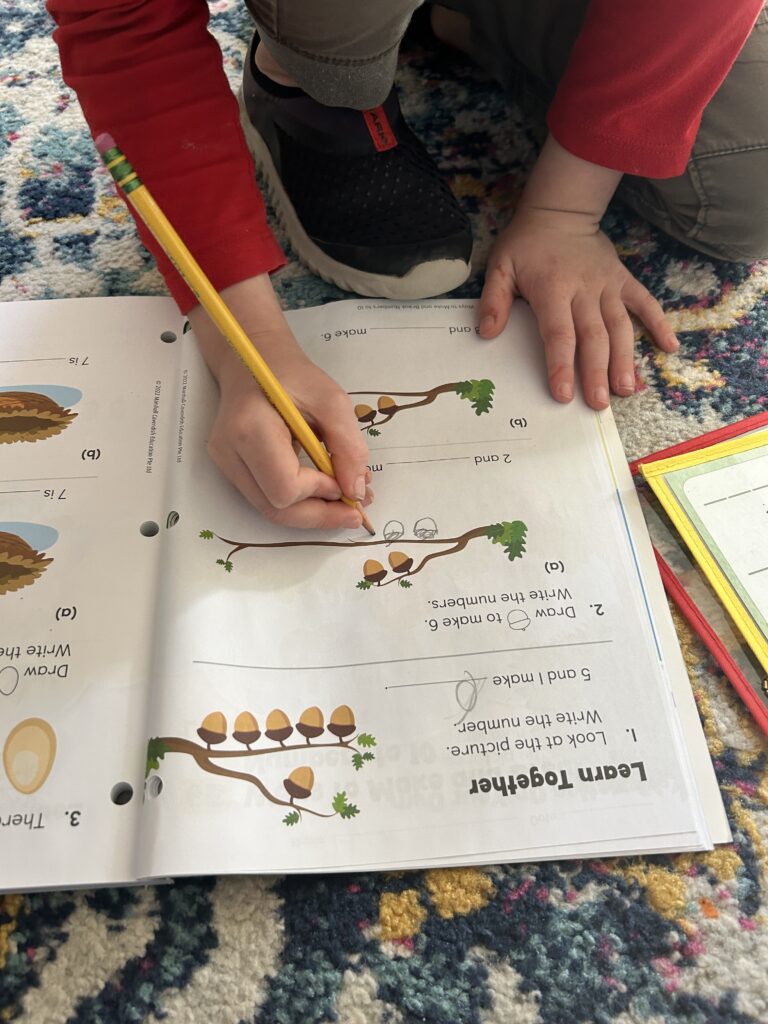
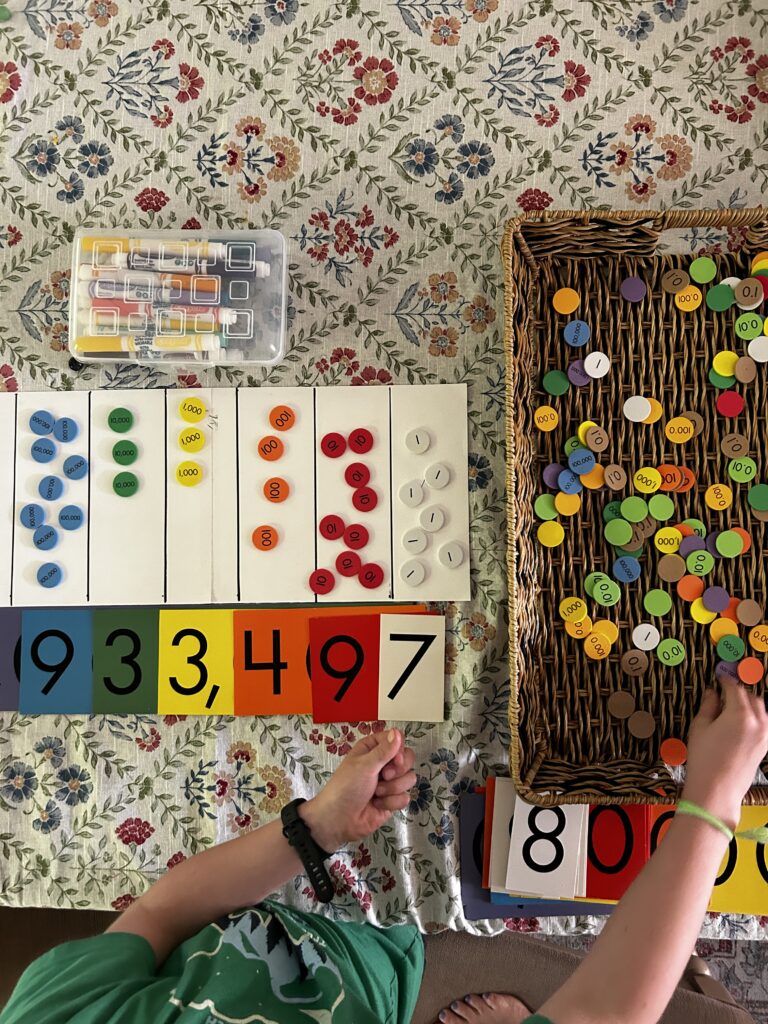
4. Math Mammoth – It’s like the super simple no fluff version of Math with Confidence. If you have a child who doesn’t need anything cutesy and wants to play zero math games, this is a great program. Cheap, thorough, effective.
People always ask me about Saxon… Short answer: I’ve never met anyone who did Saxon and loved math. So that’s a no for me 😉 lol. I realize that might be an unpopular opinion. Also, if you love Saxon, go for it. You’re the boss of your homeschool. It just doesn’t make my top few programs that I’d recommend.
Supplemental Fact Practice
Sing skip counting songs as young as you can… ages 5-9 ish. Younger siblings can listen along and learn even sooner. Memorizing the skip counting sequences helps with sooooo many elementary and middle school math things. i.e. multiplication, division, factoring, fractions, and more!
If you don’t already use our cycle-based memory work that includes math, get AT LEAST the skip counting songs here.
I’ve tried all the free online games, all the cutesy color by fact numbers & games etc. etc. etc. At the end of the day, all of my kids prefer to just keep their math fact practice & their fun and games separate from one another.
They’d mostly rather do a few minutes of boring fact practice in an old school workbook and then go off and have fun coloring books & pixel art printables & board games.
So we usually do just that! Fact books a few minutes a day until they’re mastered; once they’re mastered, you use them enough in our normal math curriculum. No need to keep practicing.
My favorite supplemental fact books are these. They’re super cheap & boring. I have kids do 3 lines a day from BOTH addition/ subtraction or multiplication/ division… whichever level they’re at. If writing that much is the hold up, they can tell them to me out loud. We use sticky note tabs to mark where they’re at. Once they master a fact set, we jump ahead…. we don’t necessarily complete ALL the pages of 3s practice, if that makes sense.
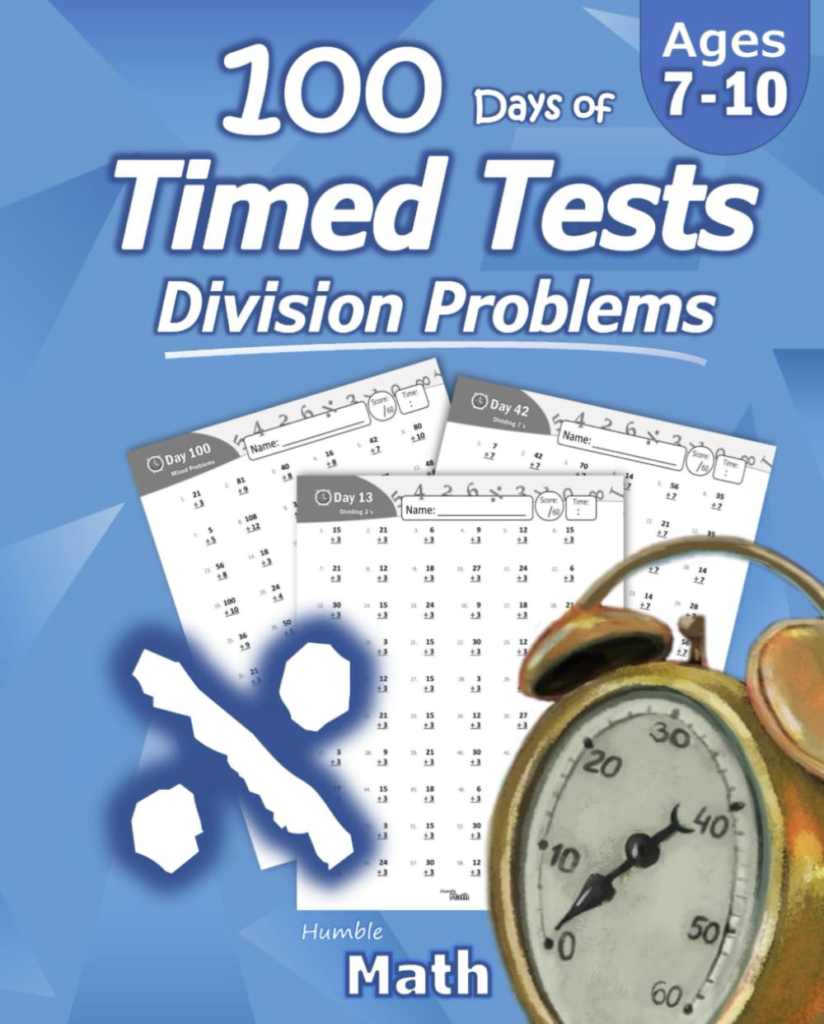
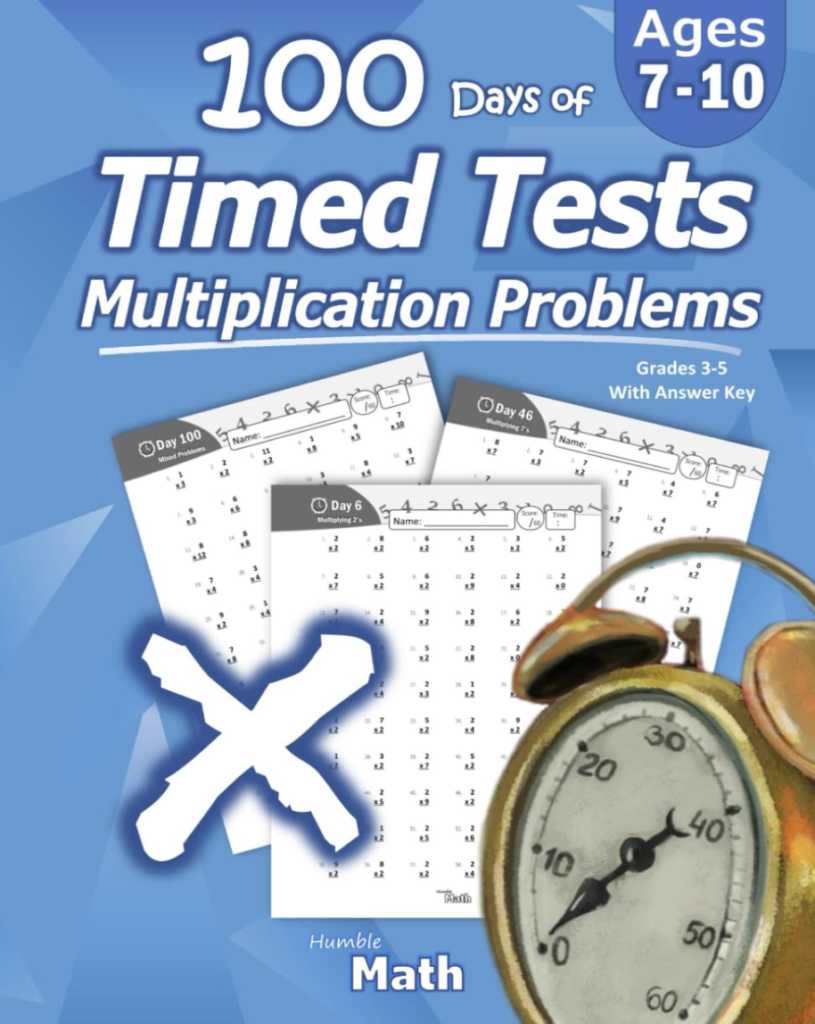
FWIW – for a couple years, we did Phonics/ Reading/ Spelling lessons 2x a week and Math lessons 2x/ a week. Like block scheduling. I got this advice from a seasoned homeschool mom. My kids had independent practice on the off days. It was GLORIOUS!! Especially in the years when my hands were full with 4 kids ages 2-7 and 3-8.
Everyone still progressed wonderfully.
Science
Full disclosure: we’ve never used formal science curriculum. In fact, the few I’ve tried to purchase were very disappointing. Even the ones that looked amazing.
Instead we…
Memorize science songs from musical memory and read books that go along with those topics!! This is the “spine” for our elementary science years. The songs were developed in partnership with a science teacher & vetted by a couple scientists/ engineers.
- Cycle 1 – Astronomy and earth science
- Cycle 2 – Physics & chemistry
- Cycle 3 – Life science & human anatomy
It’s SO simple & I promise you, it’s enough.
Especially when you add in a smattering of the following other activities now and then:
- Go to museums
- Observe nature outside closely
- Watch documentaries, nature shows, Magic School Bus & the beloved Wild Kratts
- Go to the zoo
- Go to farms
- Go on field trips
- Buy science kits & microscopes
- Buy building toys, logic puzzle activities, sketch books, etc.
- Rotate subscription science activity boxes from Kiwi Co and Crunch Labs
- Say yes to all help in the kitchen and all manner of requests like: “Can I make slime? Can I try to build a dam in the back yard? Can I raise tadpoles? Can I get a fish? Can I try to make a rocket? Can I put a mentos in diet coke? etc. etc. etc.
These are my favorite “science experiments for kids” books & I do occasionally refill a cabinet with all the random supplies these books require. I say yes when I can, especially if we’re just at home, and encourage kids to clean up their own mess!
My middle schooler is doing some Good and the Beautiful Units this year! And she’s very excited about it. IDK if that’s her personality (she loves animals and nature) or if she’s excited because we haven’t beat all the enthusiasm out of her with lame science curriculum. LOL
I guess this is your permission to occasionally enjoy the above activities and wait until your kids are older to add official science classes.
history
General approach:
- Memorization songs (ages 4-8)
- Reading stories (all ages)
- Watching videos (all ages)
- Timeline notebooks (ages 9 or 10+)
- Finding places on maps (ages 6-7+)
- Blob mapping the continents (ages 6-8)
- Map drawing if interested
- Seterra Online & Printed Out – alternate; variety; they get it over time with repetition
Considering I didn’t know the difference between WW1 and WW2 when I went to college and I had never read any documents from the founding of America before I was an adult, I’d have to conclude that sitting in “history classes” does not a historian make.
I’m all about layers and layers of:
- Stories from various perspectives
- Memorizing important places/ people/ dates that serve as little “pegs” on the human history timeline in your mind
- Finding places on the map as you read
- Discussion
- Videos
Give it time & repetition & stuff will sink in.
Resources we’ve used:
- Give Your Child the World – a great book for homeschooling moms about learning geography & history through literature.
- Child’s History of the World
- Story of the World books & pdfs of the activity books – mostly for maps, coloring pages; I’m not really a “history activity mom”
- Classical Conversations Timeline Song
- Gobs and gobs of history picture books and biography picture books
- Sonlight history related book lists
- These exact timeline notebooks – pro tip: if you go to the author page and then search “timeline” you’ll see all the colors available
- Books from the Beautiful Feet Booklists – I’ve never used their teacher’s guides as they seem overwhelming.
Here is a set we used for early American history one year.
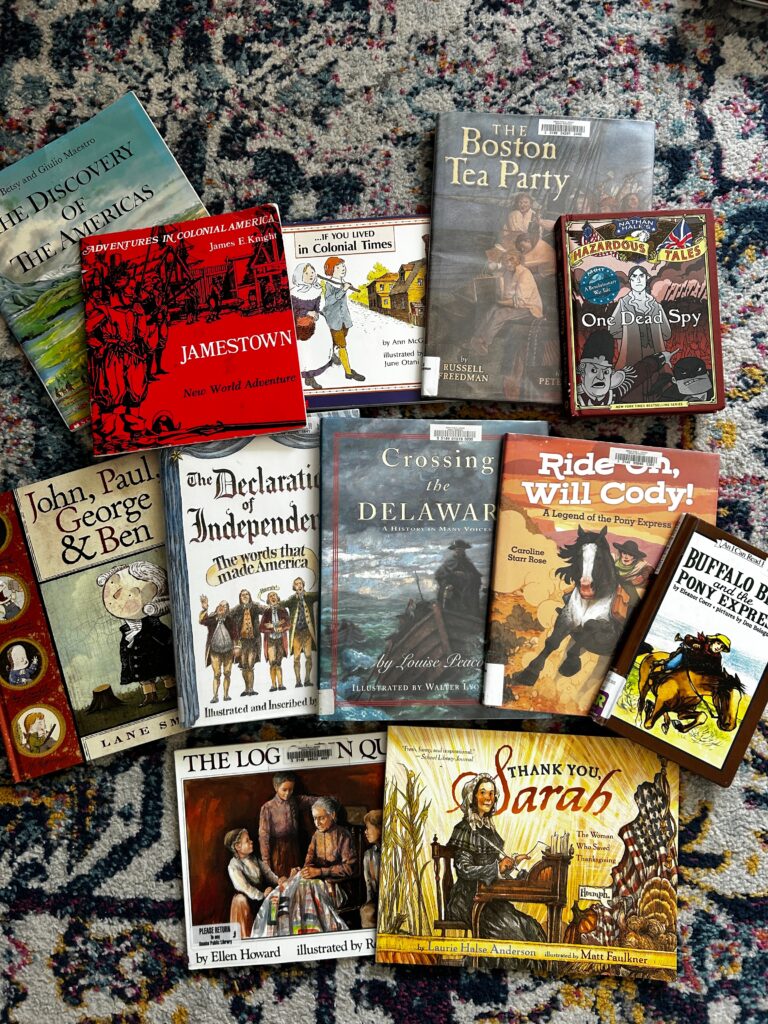
Sometimes, I’ll have the kids do a “notebooking page.” Notebooking hasn’t been a HUGE part of our homeschooling work, but we do it occasionally. Here’s one from when the girls were super little! 5 and 6 I think.
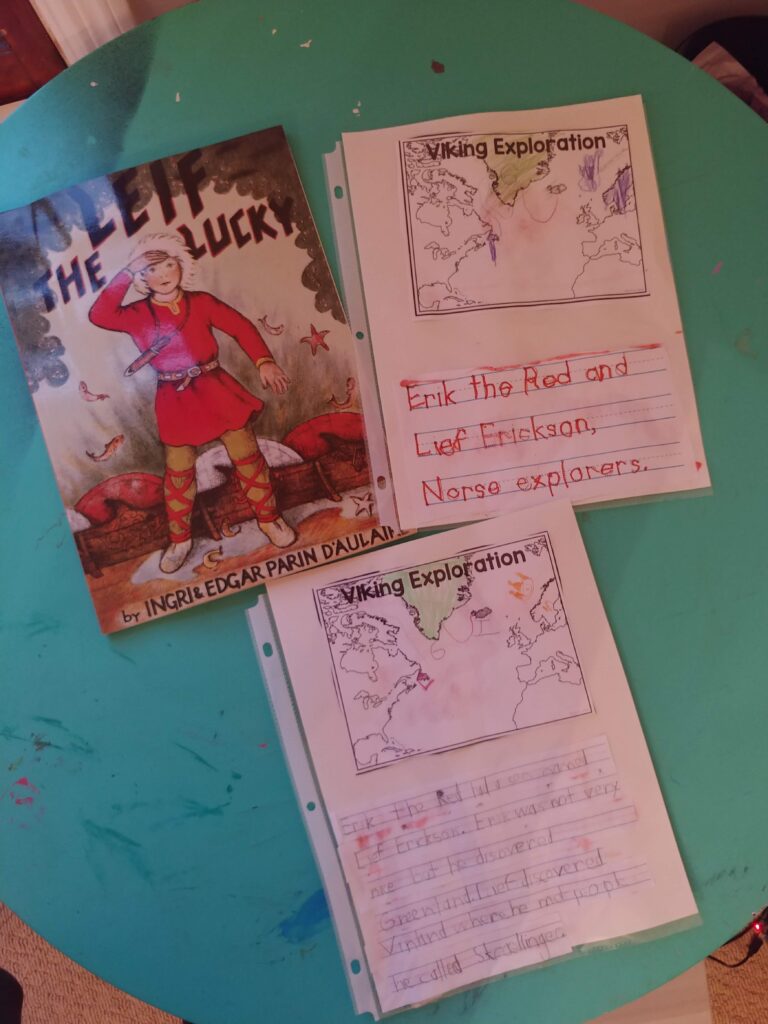
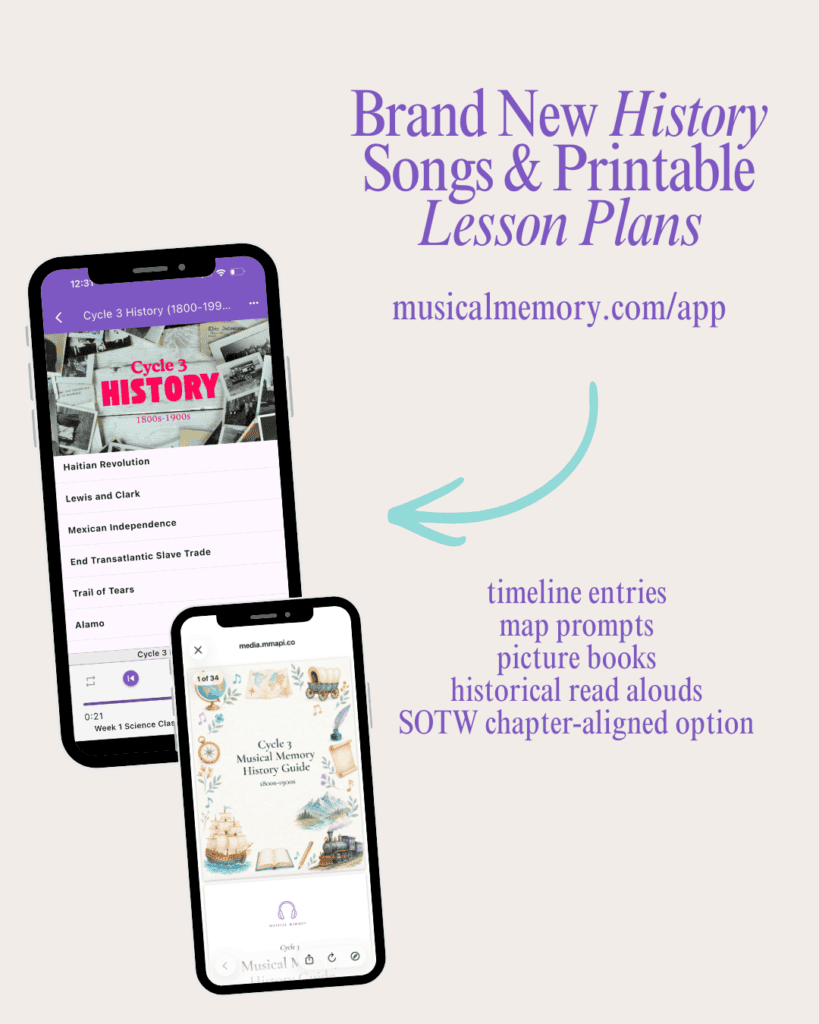
I usually scope our own history for the year over the summer. After 4-5 years of cycling through with my own children, I’m writing history songs & curriculum that pieces together all these things!! Cycle 3 is available now: 1800-1900s.
My new history program is also available in the app.
Everything Else
My kids take private music lessons & play recreational sports & see friends often. Any other random topic or unit or thing we want to study gets lumped into morning time or free time or the general living of life together!
- Shakespeare – read lots of versions aloud; memorize some with this book.
- Composers & Artists – Mike Venezia has a great picture book series; our library has lots of these. Simply Charlotte Mason Picture studies are nice too but we never follow them purely.
- Poet study – Simply charlotte mason has good anthologies by poet; again, you can just get library books too.
- Drawing lessons – whatever the kids can find on youtube!
- Watercolor lessons – I like the Brighter Day Press ones; my kids like those just okay. They usually search youtube for random lessons.
- Misc. Units & Rabbit trails
- Typing – after kids learn to read; typing club until they have enough of home row to type their essays from IEW
I’ve heard amazing things about Hoffmann Academy for online piano! I used to be a piano teacher, so I just taught my kids but I’ve recommended a few friends to this program & their kids have enjoyed it. (It’s always on sale in August!!)
Books About Teaching
Remember, teaching is relational. Learning ebbs and flows. It’s never in a perfectly straight line. It’s all layers and layers of understanding, repeated exposure from lots of different angles, thoughts & ideas growing deeper over time. You’re planting & tending a garden. Lay the “feast” of true, good, and beautiful ideas before your children and trust the process.
Don’t forget to “teach yourself,” with great books about teaching. A few of my favorites are below. I don’t necessarily agree with every thing in every book, but they’ve all been helpful in various ways.
- Read Aloud Handbook, 7th Edition
- Read Aloud Family
- Morning Time: A Liturgy of Love
- The Three R’s
- Preschool Math at Home
- A Mathematician’s Lament
- Teaching to Change Lives
- The Call of the Wild & Free
- The Core
- Weapons of Mass Instruction
- The Four Hour School Day
- Educating the Whole Hearted Child
- Teaching From Rest